
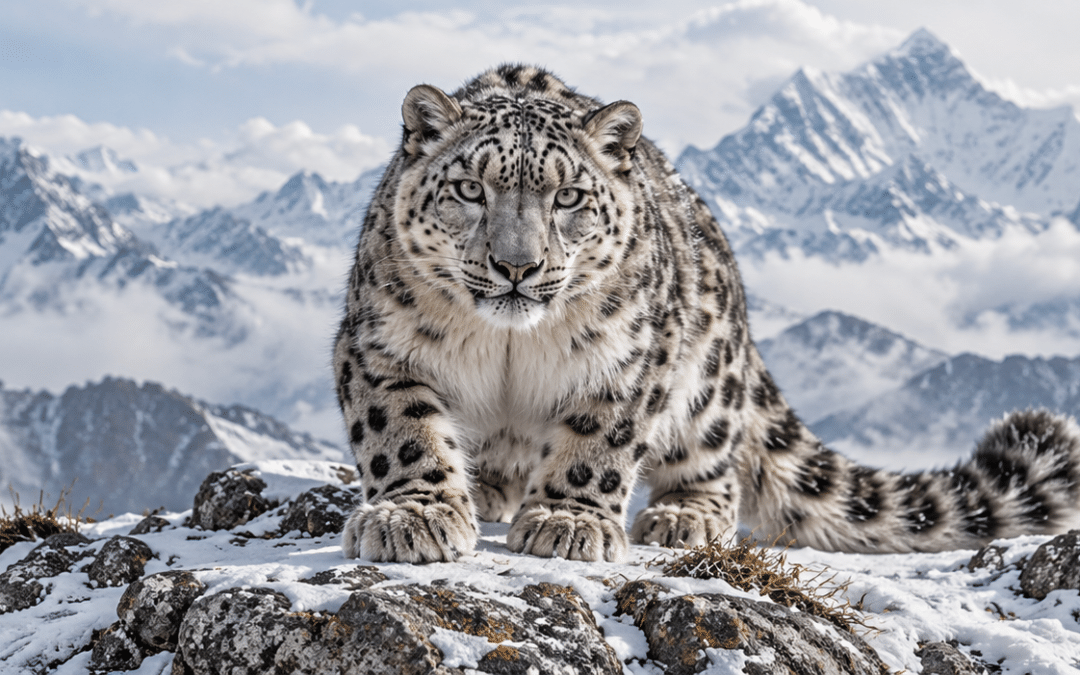

AT A GLANCE
- Common Name: Leopard
- Scientific Name: Panthera pardus
- Category: Mammals
- Subcategory: Carnivorans
- Size: Head and body length: 3.0–6.2 ft (90–190 cm); Shoulder height: 24–28 in (60–70 cm); Tail length: 2.1–3.6 ft (64–110 cm)
- Weight: Adult males: 80–198 lb (37–90 kg); Adult females: 62–132 lb (28–60 kg)
- Lifespan: 12–15 years in the wild; up to 20–23 years in captivity
- Diet: Carnivore / Opportunistic hypercarnivore (medium ungulates like impalas and gazelles, primates, birds, and reptiles)
- Habitat: Dense savanna woodlands, forested river basins, rocky kopjes, and rainforest canopies
- Range: Patchy distribution across sub-Saharan Africa, the Indian Subcontinent, and Southeast Asia
- Conservation Status: Vulnerable (IUCN Red List)
Overview
The Leopard (Panthera pardus) is the most widespread, adaptable, and secretive member of the genus Panthera, holding a storied place among the ‘Big Five’ of the African wilderness and the great cat family Felidae. Celebrated for its muscular physique, stealthy ambush hunting tactics, and stunning golden-yellow to tawny coat patterned with elegant, dark circular rosettes, the leopard displays unparalleled biological versatility across diverse landscapes. Melanistic individuals, universally referred to as ‘black panthers,’ occur naturally in dense equatorial rainforests where their shadowed coloration confers superior nocturnal concealment.
In terrestrial ecosystems across Africa and Asia, leopards serve as critical apex and mesopredators, exerting top-down regulation over ungulate and primate populations. Unlike heavier apex competitors like lions and spotted hyenas, leopards possess astonishing biomechanical strength that allows them to hoist heavy prey carcasses—often weighing more than their own body mass—vertically up into high acacia tree forks. By stashing kills in the canopy, leopards safeguard their food supply from scavengers while recycling nutrients through the arboreal stratum. Despite extensive historical range contraction, their cryptic habits allow them to persist in fragmented habitats.
Biology and Physical Characteristics
Panthera pardus is engineered for immense strength and vertical climbing efficiency. Its heavily muscled shoulder girdle, short powerful limbs, broad paws, and long, curved retractable claws provide incredible leverage, enabling it to climb sheer vertical trunks with ease. Its long, heavy tail functions as an essential counterweight during high-canopy maneuvers and high-speed directional turns. The leopard’s coat is an evolutionary masterpiece of disruptive camouflage: circular rosette clusters without central spots break up its outline against dappled sunlight. Its tapetum lucidum provides night vision six times more sensitive than human sight, while acute hearing detects the footsteps of small prey hundreds of feet away.
Behavior and Ecology
Leopards are strictly solitary, nocturnal, and crepuscular predators that maintain expansive home ranges demarcated through claw tree scratches, scent-marking with urine, and low, rasping territorial calls that resemble the rhythmic sawing of wood. Stalking is executed with extraordinary patience: a leopard flattens its body against the ground, advancing silently until it is within 15 to 30 feet (5 to 10 m) of its quarry before launching an explosive sprint reaching 36 miles per hour (58 km/h). Females rear litters of two to four cubs in secluded rocky dens or hollow logs, concealing them meticulously for several months while hunting.
Conservation and Human Impact
Classified as Vulnerable by the IUCN Red List, Panthera pardus faces dramatic population declines and habitat fragmentation across its historical range. Several regional subspecies—most notably the critically endangered Amur leopard (Panthera pardus orientalis) and Arabian leopard (Panthera pardus nimr)—teeter on the brink of extinction. Key anthropogenic threats include retaliatory killing by livestock owners, habitat conversion for agriculture, commercial poaching for skins and body parts in traditional medicine, and trophy hunting.
Interesting Factoid
A leopard can haul a dead prey animal weighing over 250 pounds—more than twice its own body weight—straight up a vertical tree trunk into branches over 20 feet above the ground to keep it away from lions and hyenas.