AT A GLANCE
Common Name: Birch Polypore
Scientific Name: Fomitopsis betulina
Type: Fungi
Size: 2-10 in wide
Spore Print: White
Edibility: Inedible (Medicinal)
Ecology: Saprotrophic or Parasitic on Birch
Range: Northern Hemisphere (Global)
Conservation Status: Not Evaluated
Overview
The Birch Polypore (Fomitopsis betulina), also known as the “Razor Strop Fungus,” is one of the most significant and recognizable fungi in the northern boreal and temperate forests. Found exclusively on birch trees, this shelf-like mushroom is a master of wood decay and a central player in the forest cycle of death and renewal. Beyond its ecological role, the Birch Polypore has a 5,000-year history of human use, famously carried by Otzi the Iceman for its medicinal properties. It possesses a sophisticated array of bioactive compounds that make it an antibiotic, anti-inflammatory, and traditional bandage. As a specialized consumer of birch, it dictates the health and succession of the northern woodlands. Its existence is a remarkable study in fungal host-specificity, chemical potential, and the ancient connection between humans and the “pharmacopeia of the forest.”
Biology and Physical Characteristics
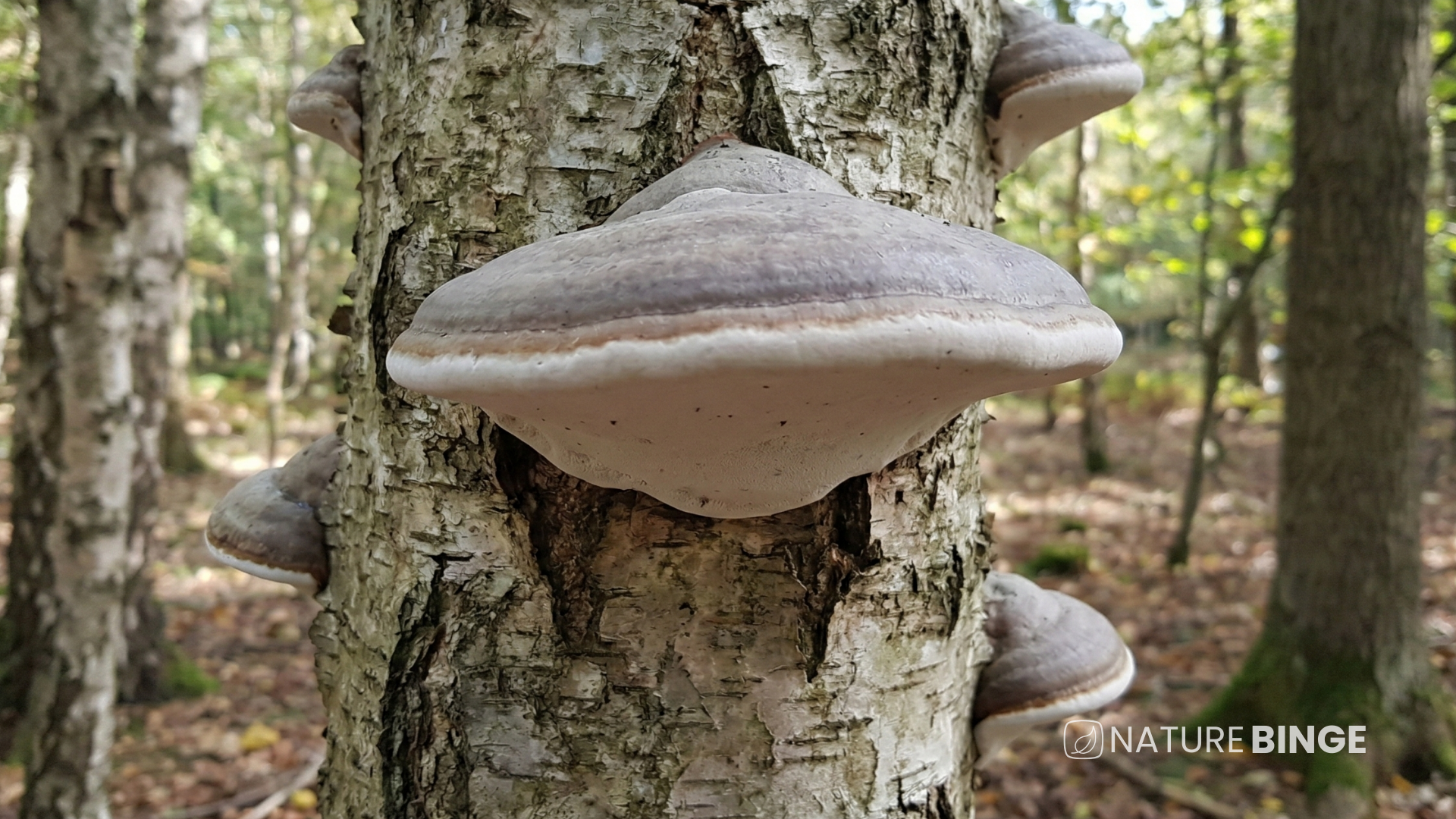
The biology of the Birch Polypore is defined by its robust, hoof-shaped structure and its absolute host-specificity. The mushroom appears as a smooth, grey-to-brown shelf on the trunks of dead or dying birch trees. The upper surface is leathery and often has a distinct “rolled” edge, while the underside is white and covered in thousands of microscopic pores where the spores are produced. Unlike many mushrooms that rot quickly, the Birch Polypore is tough and corky, allowing it to persist on a tree for over a year. Biologically, it is a “brown-rot” fungus, producing specialized enzymes that break down the cellulose in wood but leave the brown lignin behind, resulting in a characteristic “cubic” decay that provides essential structure to the forest soil.
One of their most significant biological traits is their chemical arsenal. The Birch Polypore contains unique triterpenes and betulinic acid, which the fungus sequesters from the birch bark. These compounds have been shown in scientific studies to possess potent antimicrobial and immune-supporting properties. Historically, the tough, leathery skin of the mushroom was used by barbers to “strop” or sharpen razors, giving the fungus its common name. The white, inner flesh is also naturally absorbent and antiseptic, making it a “natural bandage” used by forest travelers for millennia. This biological efficiency and durability allow the Birch Polypore to thrive in the harsh northern climate, acting as a slow-motion recycler of the birch forest.
Behavior and Ecology
In the boreal forest, the Birch Polypore is a primary agent of change. While it is predominantly saprotrophic, feeding on dead birch logs and stumps, it can also act as a weak parasite on aging or stressed trees. By breaking down birch timber, it returns carbon and essential minerals to the soil, supporting the growth of new plants and trees. Its presence is a sign of a maturing forest where the natural cycle of decay is active. Interestingly, the fruiting bodies only appear once the tree is already significantly compromised, marking the final stage of the host’s life.
Ecologically, the Birch Polypore also provides a microhabitat for various specialized insects, particularly fungus beetles and flies, which live and breed within the woody tissue of the mushroom. Its role in the “soil-wood interface” is vital for the long-term health of the northern wilderness. In human culture, the mushroom is a seasonal treasure for its medicinal value. Because it is so widespread and easy to identify, it is often one of the first fungi that aspiring mycologists learn to recognize in the wild. The relationship between the fungus and the birch tree is a perfect example of the “wood wide web,” where a single specialized organism can influence the health and chemistry of an entire forest landscape.
Conservation and Human Impact
While the Birch Polypore is currently a successful and widespread species that is not of conservation concern, it is sensitive to the over-management of forests. The removal of dead birch wood and “snags” from woodlands reduces the available habitat for the fungus and can disrupt the local nutrient cycle. Leaving dead timber in place is a simple but effective way to support the Birch Polypore and the myriad of other species that depend on decaying birch for survival.
The most significant human impact on the Birch Polypore is its ongoing research in the fields of biotechnology and medicine. As interest in “traditional remedies” grows, the demand for high-quality, wild-harvested polypores has increased. This has led to advancements in our understanding of fungal chemistry and a greater appreciation for the role of fungi in the environment. From the birch bark to the laboratory, the Birch Polypore represents the incredible potential of the fungal kingdom to heal both the land and the body. Its enduring presence is a reminder that nature’s most valuable treasures are often found in the quiet, decaying corners of the woods, working silently to sustain the life of the forest through the constant cycle of renewal.