

Overview
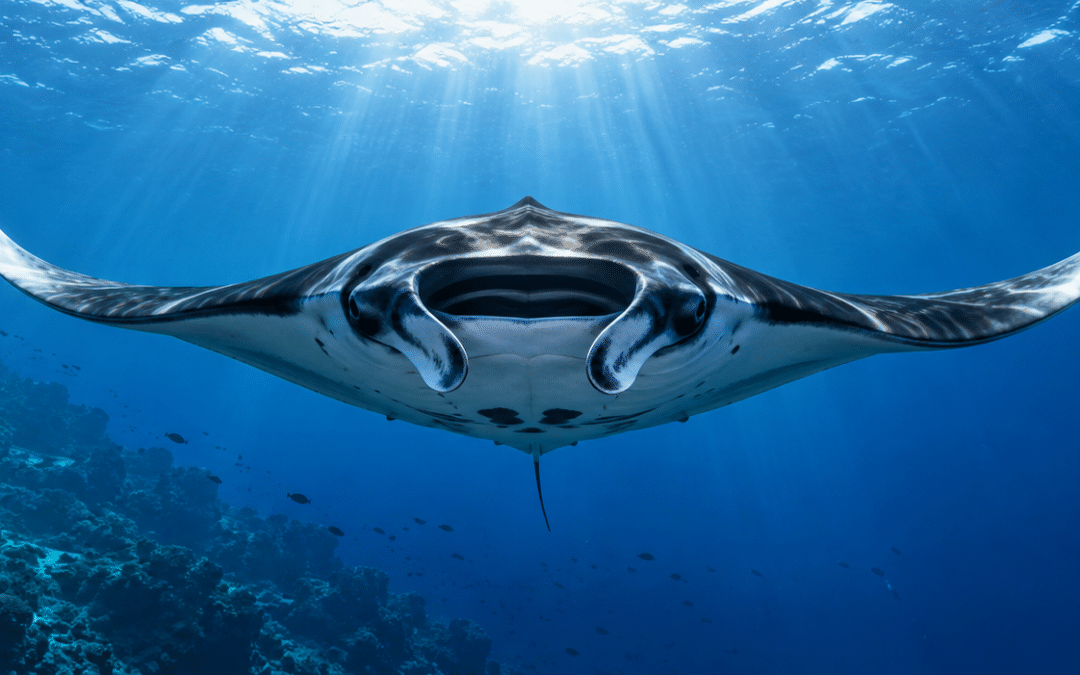
The Giant Oceanic Manta Ray (Mobula birostris) is the world’s largest batoid fish, a colossal and peaceful marine acrobat that glides through open ocean waters like an underwater bird. Boasting a colossal wingspan that can span over 20 feet and possessing the highest brain-to-body mass ratio of any cold-blooded fish, this gentle filter feeder represents a pinnacle of marine intelligence and pelagic grace.
Biology and Physical Characteristics
The anatomy of the giant manta ray is designed for efficient underwater flight. Its pectoral fins form sweeping triangular hydrofoils that propel its immense body through open water with rhythmic wingbeats. Projecting from its head are two flexible cephalic fins that unroll to funnel water and plankton directly into its cavernous, forward-facing mouth, while specialized spongy gill plates filter microscopic organisms from the flow. Unlike stingrays, the giant manta lacks a venomous barb on its tail, relying on speed and sheer size for defense. Every individual possesses a distinct, permanent pattern of black-and-white spots on its ventral underbelly, functioning like a biological fingerprint.
Behavior and Ecology
Giant manta rays are inquisitive, highly social pelagic navigators that frequently congregate at offshore seamounts and coral cleaning stations, where wrasses and butterflyfish peck parasites from their skin. They display remarkable feeding coordination; when feeding on dense plankton blooms, groups will form spiraling ‘cyclone feeding’ chains, cartwheeling somersaults over and over to maximize caloric intake. In spectacular displays of aerial strength, manta rays frequently leap completely clear of the water, crashing back against the surface to dislodge remoras, communicate across distances, or display fitness during courtship.
Conservation and Human Impact
Giant manta rays are listed as Endangered by the IUCN due to drastic global population declines driven by unsustainable fishing. The primary catalyst has been the international trade in manta gill plates, targeted for traditional Asian pseudo-medicinal tonics. Furthermore, accidental entanglement in commercial pelagic purse-seine nets and driftnets (bycatch) kills thousands of mantas annually. Because females reach sexual maturity late and give birth to only a single pup every two to three years, recovery rates are exceptionally slow. Conservation strategies focus on worldwide gill plate trade bans and establishing expansive marine protected areas.
Interesting Factoid
Giant manta rays have passed the ‘mirror self-recognition test’ in scientific trials, demonstrating self-awareness and contingency checking previously thought unique to primates, elephants, and dolphins.