
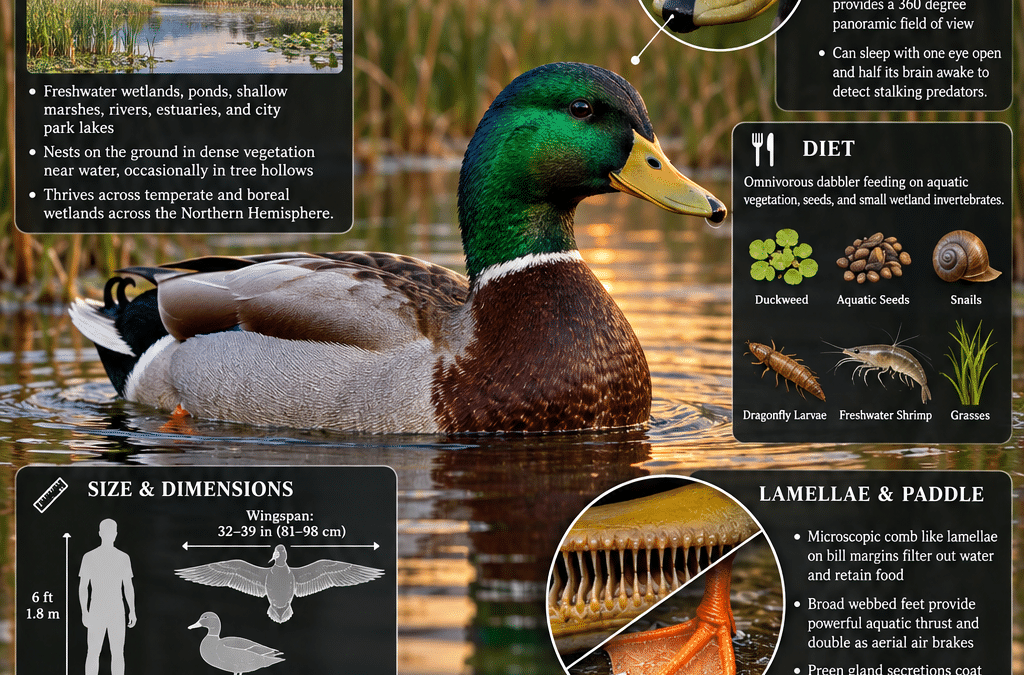

Overview
AT A GLANCE
- Common Name: Mallard
- Scientific Name: Anas platyrhynchos
- Category: Birds
- Subcategory: Waterfowl
- Size: Body length: 20–26 in (50–65 cm); Wingspan: 32–39 in (81–98 cm)
- Weight: 1.6–3.5 lb (0.7–1.6 kg); breeding drakes slightly heavier than hens
- Lifespan: 5–10 years in the wild; record banding recovery of over 27 years
- Diet: Omnivore / Dabbling forager (aquatic plant roots, seeds, submerged vegetation, aquatic insects, mollusks, and crustaceans)
- Habitat: Shallow wetlands, freshwater marshes, prairie potholes, agricultural wetlands, and park ponds
- Range: Circumpolar Holarctic distribution throughout North America, Eurasia, and North Africa
- Conservation Status: Least Concern (IUCN Red List)
The Mallard (Anas platyrhynchos) is the most abundant, ecologically adaptable, and globally ubiquitous species of dabbling duck in the waterfowl family Anatidae. Characterized by striking sexual dimorphism in breeding plumage, the male drake displays an unmistakable iridescent bottle-green head, crisp white neck ring, chestnut breast, and distinct curled black central tail coverts, while the female hen possesses cryptic mottled-brown camouflage plumage. The species serves as the principal genetic ancestor of nearly all domestic duck breeds cultivated across the globe.
Widely distributed throughout the Northern Hemisphere, mallards play an essential role in inland freshwater ecosystems as seed dispersal vectors and primary consumers of aquatic macroinvertebrates and marsh vegetation. Their strong dispersal capacity, plastic nesting habits, and omnivorous dietary breadth have allowed them to colonize a vast spectrum of natural and anthropogenically modified wetland landscapes. While global populations are exceptionally robust, localized introgressive hybridization with regional indigenous duck taxa presents complex evolutionary challenges.
Biology and Physical Characteristics
Anas platyrhynchos possesses specialized morphological adaptations for surface-feeding and amphibious life. Their broad, flattened bill is lined along the inner margins with fine, comb-like keratinized lamellae, which act as a miniature sieving mechanism that filters aquatic invertebrates, seeds, and vegetative matter from water and mud. A dense undercoat of down feathers shielded by interlocking contour feathers coated in waterproofing secretions from the uropygial gland provides superior thermal insulation in icy waters. Both sexes exhibit a distinctive structural iridescent violet-blue speculum bordered by white bars on the trailing edge of their secondary flight feathers, vital for species recognition during flight.
Behavior and Ecology
Mallards are classic dabbling ducks, foraging primarily by tipping their bodies upside down (‘up-ending’) into shallow water to graze on benthic substrate vegetation and aquatic invertebrates rather than executing deep subsurface dives. Courtship displays initiate in late autumn and continue through winter, featuring synchronized head-bobbing, tail-wagging, and ritualized whistle-calls by drakes competing for mate selection. Hens construct well-concealed ground nests lined with vegetation and down feathers in dense reed beds or prairie uplands, incubating a clutch of 8 to 13 pale greenish-buff eggs for roughly 28 days before leading the precocial ducklings to water within 24 hours of hatching.
Conservation and Human Impact
The IUCN Red List classifies Anas platyrhynchos as Least Concern, with an estimated global population exceeding 19 million individuals across its expansive native and introduced range. Regulated waterfowl harvest through sustainable hunting quotas is closely managed across international flyways, supported by wetland conservation initiatives such as the North American Waterfowl Management Plan. However, agricultural drainage of prairie pothole wetlands, lead shot toxicity in historical shooting grounds, and pervasive hybridization with native wild congeneric ducks like the American Black Duck and Hawaiian Koloa represent primary ongoing management concerns.
Interesting Factoid
The hallmark ‘quack’ vocalization universally associated with ducks is produced solely by female mallards, whereas male drakes lack this vocal capability and communicate instead with soft, raspy whistles and low reedy grunts.