

Overview
AT A GLANCE
- Common Name: Tiger
- Scientific Name: Panthera tigris
- Category: Mammals
- Subcategory: Big Cats
- Size: Head-body length: 2.0–3.1 m (6.6–10.2 ft); tail length: 0.9–1.1 m (3.0–3.6 ft); shoulder height: 0.9–1.2 m (3.0–3.9 ft)
- Weight: 100–300 kg (220–660 lb), with male Amur tigers reaching up to 320 kg (705 lb)
- Lifespan: 10–15 years in the wild; up to 26 years in captivity
- Diet: Obligate carnivore (sambar deer, wild boar, chital, gaur, elk)
- Habitat: Tropical moist evergreen forests, alluvial grasslands, mangrove swamps, and temperate boreal taiga
- Range: South and Southeast Asia, China, and the Russian Far East
- Conservation Status: Endangered
The tiger (Panthera tigris) reigns as the largest extant cat species on Earth, representing a pinnacle of solitary carnivore evolution across Asian forest biomes. Diverging from ancestral pantherine lineages approximately two million years ago in eastern Asia, the tiger developed exceptional morphological adaptations for stealth stalking and solitary big-game predation. As an apex predator, it anchors complex trophic cascades, sustaining ecological equilibrium from Siberian boreal taiga to tropical peat swamps and alluvial riverbanks.
Historically occupying an expansive geographic distribution spanning from eastern Turkey across Central Asia, India, and Indochina to the Russian Pacific coast, the species has suffered staggering geographic contraction. Over ninety-five percent of historical tiger habitat has disappeared due to logging, agriculture, and urban infrastructure development. Today, fragmented subpopulations endure within strictly protected reserves, where rigorous conservation interventions attempt to preserve viable genetic lineages of this cultural and ecological flagship.
Biology and Physical Characteristics
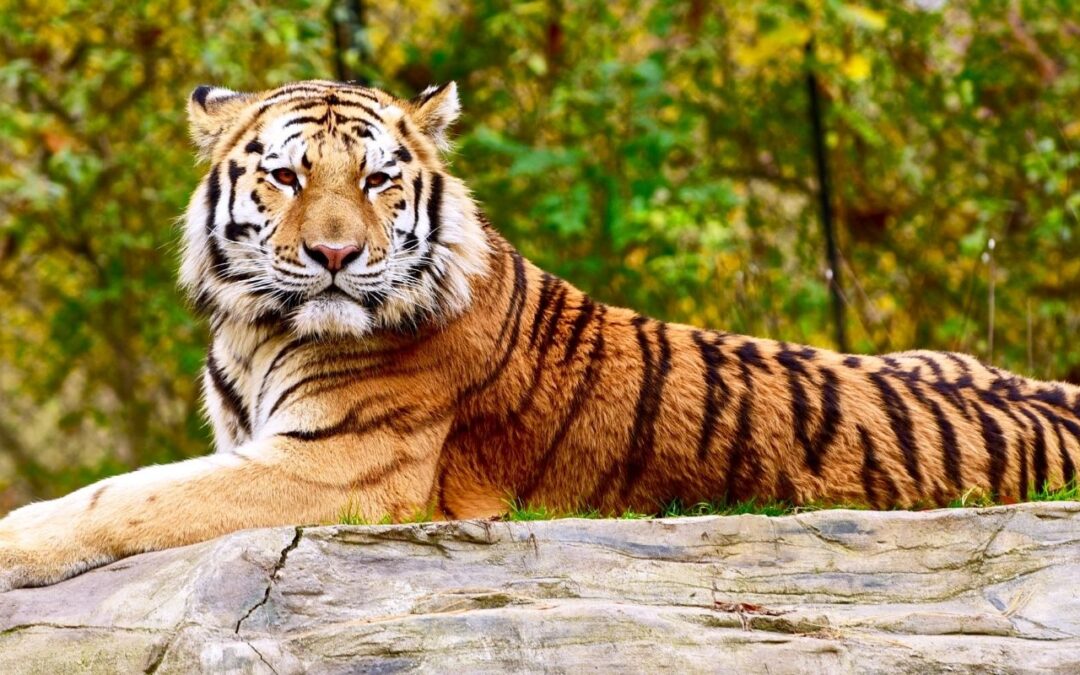
The tiger’s iconic orange-red coat adorned with dark vertical stripes exhibits disruptive coloration, breaking up its body outline against variable dappled forest light. Its massive skeletal framework is driven by compact, high-density muscle mass, allowing for short bursts of explosive acceleration and extraordinary leaping ability exceeding ten meters horizontally. Canine teeth measuring up to nine centimeters in length work in conjunction with powerful cervical musculature to snap vertebrae or deliver lethal trachea-crushing strangulation bites to prey.
Behavior and Ecology
Unlike lions, tigers maintain strictly solitary lifestyles and defend extensive home ranges marked through anal gland scent spraying, claw scoring on tree bark, and facial rubbing. They are exceptional swimmers among the big cats, regularly patrolling broad rivers, mangrove channels, and deep lakes to thermoregulate and ambuscade aquatic crossing points. Hunting occurs predominantly at dusk and night, relying on acoustic triangulation and visual acuity before executing a short, devastating rush from dense cover.
Conservation and Human Impact
Classified as Endangered by the IUCN, wild tiger populations hover around 4,500 mature individuals scattered across isolated forest islands. The most catastrophic ongoing driver of decline is the illegal international trade in tiger bones, pelts, and organs for traditional medicine, alongside relentless poaching of primary ungulate prey species. Strategic initiatives like Project Tiger in India and integrated tiger landscape corridors have catalyzed localized recoveries, though linear infrastructure projects continue to fragment core habitats.
Interesting Factoid
No two tigers share identical stripe patterns; each individual possesses an entirely unique facial and dorsal stripe configuration analogous to human fingerprints.