
Overview
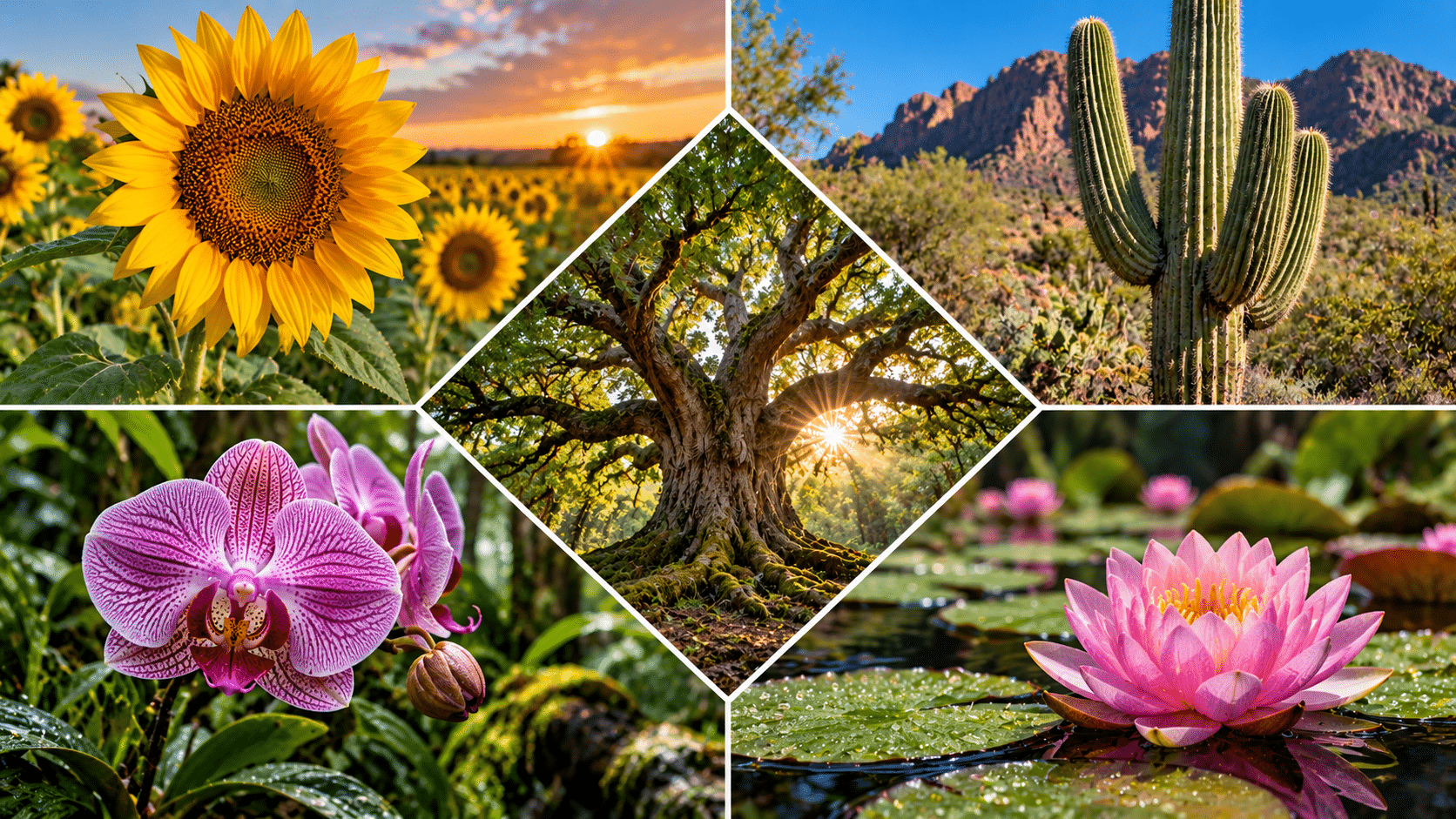
The Saguaro Cactus (Carnegiea gigantea) is the supreme monarch of the Sonoran Desert, a towering, columnar succulent that has become the definitive universal symbol of the American Southwest. Growing slowly over two centuries and capable of developing dozens of upward-curving arms, this iconic keystone plant anchors desert biodiversity, providing food, water, and shelter to an entire desert ecosystem.
Biology and Physical Characteristics
The biology of the saguaro is a masterpiece of extreme arid water conservation. Its thick, pleated columnar stem expands like an accordion during rare desert downpours, storing thousands of gallons of water within its inner spongy tissues. An extensive, shallow root network radiates outward as far as the cactus is tall, situated barely four inches beneath the soil surface to capture flash flood runoff. It employs Crassulacean Acid Metabolism (CAM), opening stomata only at night to absorb carbon dioxide and minimizing transpiration under blistering desert sun. A thick outer waxy cuticle and dense clusters of sharp spines reduce surface evaporation and deflect searing solar rays.
Behavior and Ecology
The saguaro is an indispensable keystone nursery and architectural hub. In May and June, fragrant, creamy-white blossoms open atop the arms at night, pollinated primarily by migratory lesser long-nosed bats and native bees. The resulting ruby-red, juicy fruits provide vital hydration for desert tortoises, coyotes, and songbirds at the peak of the dry summer. Gila woodpeckers and gilded flickers excavate nest cavities inside the fleshy stem; once healed by a woody callous (called a ‘saguaro boot’), these hollows are reused for decades by elf owls, purple martins, and desert rodents.
Conservation and Human Impact
While classified as Least Concern due to extensive protected populations within Saguaro National Park and the Sonoran Desert National Monument, saguaros face mounting threats. Extended multi-year megadroughts and hotter summer temperatures reduce seedling survival, while invasive non-native buffelgrass introduces catastrophic wildfire into an ecosystem unadapted to fire. Furthermore, urban development across the Phoenix and Tucson basins and illegal poaching of mature specimens for landscaping remain chronic concerns.
Interesting Factoid
A saguaro cactus grows exceedingly slowly, taking up to 10 years to reach just one inch in height and rarely growing its first upward-curving branch until it reaches 75 to 100 years of age.