
Overview
The Bull Shark (Carcharhinus leucas) is one of the most remarkable and formidable predators in the world’s oceans. Named for its blunt snout and aggressive nature, the Bull Shark is unique among large sharks for its extraordinary ability to thrive in both saltwater and freshwater environments. Found in coastal waters, estuaries, and even thousands of miles up rivers like the Amazon and Mississippi, it is a master of osmoregulation. As an apex predator in both marine and riverine systems, the Bull Shark plays a critical role in maintaining the health of coastal food webs. Its existence is a remarkable study in physiological versatility and predatory success, though its proximity to human settlements makes it one of the most frequently encountered and feared species of shark.
Biology and Physical Characteristics
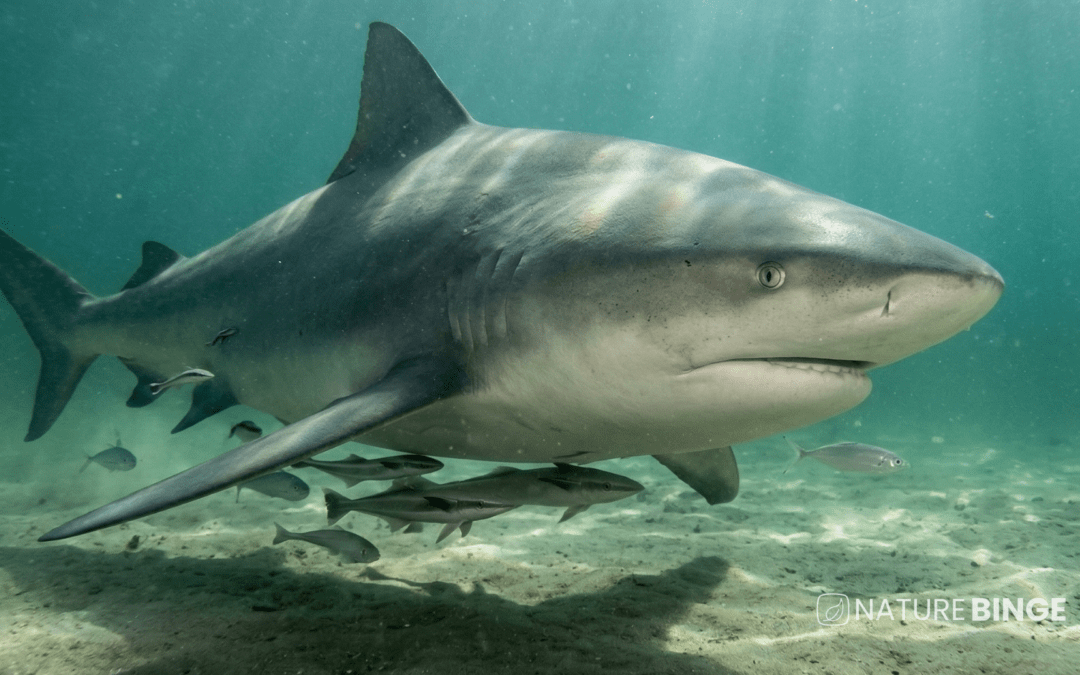
The biology of the Bull Shark is optimized for power and adaptability. They possess a robust, heavy-set body with a broad head and a short, blunt snout. Their coloration is Typically grey on top and white underneath, providing counter-shading camouflage in the sunlit waters of the shallows. Their most specialized biological feat is their ability to control the concentration of salts and urea in their blood. By adjusting the function of their kidneys and rectal gland, Bull Sharks can transition from the high-salinity ocean to the zero-salinity environment of a freshwater lake without their cells bursting—a feat that would be fatal to almost any other shark.
Their predatory arsenal is led by a massive jaw equipped with multiple rows of serrated, triangular teeth. The bite force of a Bull Shark is one of the strongest among all shark species relative to its size, allowing it to tackle a wide variety of prey, from fish and rays to dolphins and even other sharks. Their sensory systems are highly refined; they have an exceptional sense of smell and possess the Ampullae of Lorenzini, which allow them to detect the electrical fields of prey in murky water. Their eyes are small and adapted for low-visibility environments. This combination of physical power, physiological flexibility, and sensory precision makes the Bull Shark one of the most successful and widespread predators in the tropical and subtropical world.
Behavior and Ecology
Bull Sharks are predominantly solitary and opportunistic hunters. They are most active during the dawn and dusk hours, often foraging in very shallow water near the shore. Their hunting strategy is characterized by the “bump-and-bite” technique, where they use their powerful snout to stun prey before striking. Their diet is incredibly diverse, reflecting their ability to exploit different habitats. In the ocean, they prey on bony fish and rays, while in freshwater systems, they may consume turtles, crustaceans, and land animals that enter the water.
Ecologically, the Bull Shark is a vital regulator of coastal and riverine ecosystems. By preying on a wide variety of species, they help maintain the balance of the food web and prevent any single population from over-consuming resources. Their presence in a river system is a sign of a functional and productive environment with adequate prey and connectivity to the sea. They utilize freshwater rivers as nurseries, where females give birth to live young (viviparous) in areas where large marine predators are absent. This strategy increases the survival chances of the pups, which spend several years in the safety of the river before moving to the ocean. The role of the Bull Shark is that of a dominant guardian of the estuaries, a species whose health is inextricably linked to the stability of both the land and the sea.
Conservation and Human Impact
The Bull Shark is currently listed as Vulnerable by the IUCN, with populations facing significant threats from human activity. The greatest threat is “bycatch” in commercial fisheries and the impacts of coastal development, which degrades the estuaries and rivers they depend on as nurseries. Furthermore, because they live so close to human populations, they are frequently targeted in shark control programs or killed out of fear. Pollution and the construction of dams also fragment their riverine habitats and reduce prey availability.
Conservation efforts focus on habitat restoration, the implementation of sustainable fishing practices, and public education to reduce fear-based killing. Protecting the mangroves and river systems that serve as Bull Shark nurseries is essential for the long-term survival of the species. Many organizations also work to promote “shark-safe” practices and improve our understanding of Bull Shark movements through acoustic and satellite tracking. Protecting the Bull Shark is about more than just saving a large predator; it is about ensuring the resilience and productivity of our coastal and freshwater heritage. Their powerful presence remains a testament to the incredible efficiency and adaptability of life in the wild.
Conclusion
The Bull Shark stands as a unique bridge between two worlds, a predator that has mastered the challenges of both the deep sea and the inland river. By respecting their power and acknowledging their vital ecological role, we can work toward a future where these ancient hunters continue to thrive in the complex and vibrant ecosystems they call home. Their survival is a critical step in preserving the biological integrity of our planet’s most productive waters.