AT A GLANCE
Common Name: Leopard
Scientific Name: Panthera pardus
Type: Mammal
Length: 3-6.2 ft
Weight: 66-176 lb
Lifespan: 12-17 years
Diet: Carnivore
Habitat: Forests, savannas, deserts
Range: Africa and parts of Asia
Conservation Status: Vulnerable
Overview
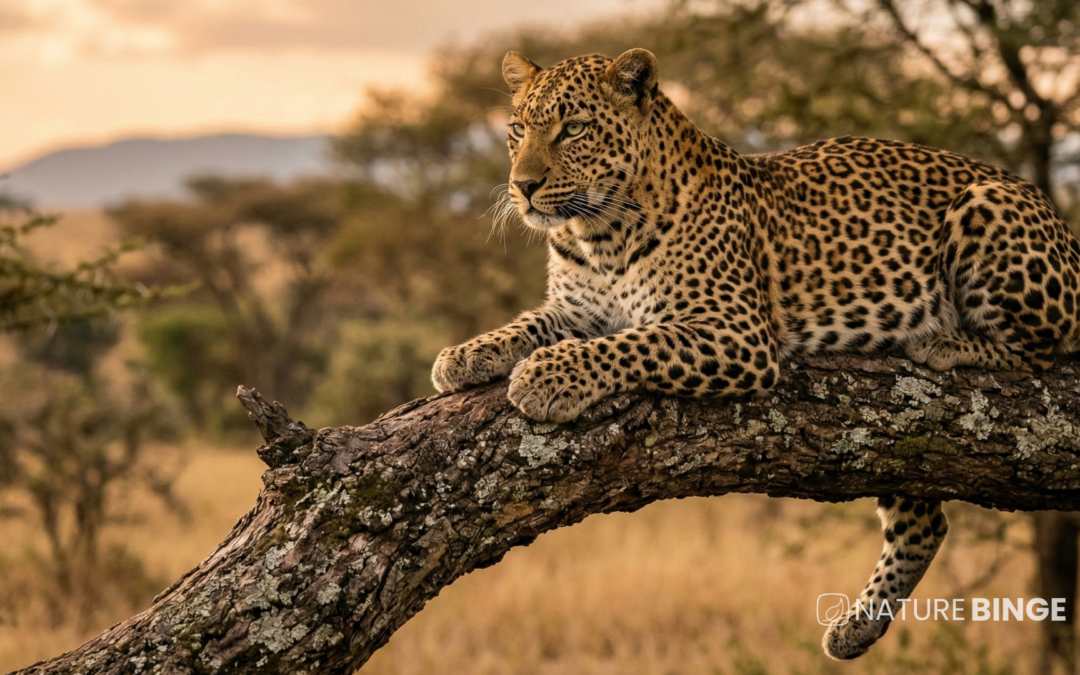
The Leopard (Panthera pardus) is the most widely distributed of all big cats and a master of adaptability. Known for its extraordinary strength and stealth, the leopard thrives in a vast range of environments, from the tropical rainforests of the Congo to the arid deserts of the Arabian Peninsula. Its most recognizable feature is its beautiful coat, covered in rose-like spots called rosettes. Unlike many other big cats, leopards are solitary and highly reclusive, making them one of the most difficult predators to track in the wild. As a keystone species, they play a vital role in regulating the populations of medium-sized mammals and ensuring the balance of diverse ecosystems. Their existence is a remarkable study in opportunistic hunting, vertical agility, and the resilience required to survive in an increasingly fragmented world.
Biology and Physical Characteristics
The biology of the Leopard is optimized for power and stealth. They possess a muscular, relatively short-legged build that provides the stability and leverage needed for climbing and carrying heavy prey. Their rosettes are smaller and more densely packed than those of the jaguar, providing excellent camouflage in the dappled light of the forest canopy and the shadows of rocky outcrops. Melanistic leopards, commonly known as “black panthers,” occur in humid forest environments where their dark coat provides a distinct advantage during nocturnal hunting.
One of their most formidable biological adaptations is their strength. Leopards are the strongest climbers among big cats, capable of hauling carcasses twice their own weight high into the branches of trees to protect them from scavengers like hyenas and lions. Their jaws are powerful, and their paws are equipped with sharp, retractable claws that provide incredible grip. Their sensory systems are highly refined; they have exceptional night vision and an acute sense of hearing, allowing them to navigate and hunt in complete darkness. Their thick, muscular tail provides essential balance during high-speed movements in the canopy and while chasing prey on the ground. This combination of physical power, camouflage, and sensory precision makes the leopard one of the most effective and versatile predators on the planet.
Behavior and Ecology
Leopards are predominantly solitary and highly territorial animals. They utilize scent marking and vocalizations, including a distinctive “sawing” rasp, to communicate with other individuals and define the boundaries of their large home ranges. These ranges can vary significantly in size depending on the availability of prey and cover. Leopards are opportunistic generalists with the most diverse diet of any big cat, preying on over 90 different species, including antelope, baboons, rodents, and even insects. Their hunting strategy is a masterclass in stealth; they often stalk their prey to within a few dozen feet before launching a sudden, high-powered strike.
Ecologically, the Leopard is a vital regulator of diverse ecosystems. By preying on a wide variety of animals, they prevent any single population from over-consuming the vegetation or resources. Their role is especially critical in areas where other large predators are absent. Female leopards are devoted mothers, raising their cubs for up to two years and teaching them the complex skills of climbing, hunting, and avoiding larger competitors. The long-term presence of a healthy leopard population is a definitive indicator of a functional and diverse ecosystem where the food web is intact. However, their reliance on large, connected landscapes and adequate cover makes them sensitive to habitat loss and human encroachment. Their role in the ecosystem is that of a “ghost predator,” a species whose success is inextricably linked to the preservation of the world’s remaining wild spaces.
Conservation and Human Impact
The Leopard is currently listed as Vulnerable by the IUCN, with populations having declined significantly across much of their range. The primary threats are habitat loss and fragmentation driven by agriculture, livestock grazing, and infrastructure development. As their wild prey disappears, leopards increasingly come into conflict with humans, often preying on livestock and resulting in retaliatory killings. Illegal poaching for their beautiful skins and for the traditional medicine trade also remains a major pressure in many regions.
Conservation efforts are focused on the protection of large, connected landscapes and the promotion of “predator-friendly” farming practices. Programs that work with local communities to implement non-lethal deterrents and provide compensation for livestock losses are essential for promoting coexistence. Scientific research using camera traps and GPS tracking is providing vital data on leopard movements and habitat requirements. Protecting the Leopard is about more than just saving a single cat; it is about preserving the incredible diversity of life that exists across two continents. Their survival ensures that the most adaptable spirit of the wild continues to roam from the savanna to the clouds.