
Overview
The Silver Maple (Acer saccharinum) is one of the fastest-growing and most resilient trees in the North American hardwood forest. Named for the brilliant silvery-white undersides of its leaves that “shimmer” in the wind, it is a master of the riparian environment. Found primarily along the banks of rivers, lakes, and in flooded swamps across the eastern United States and Canada, the Silver Maple is a pioneer species that thrives where other trees struggle. It provides critical soil stability in flood-prone areas and acts as a primary source of food and shelter for a vast array of wetland wildlife. Its existence is a remarkable study in rapid growth, hydric adaptation, and the vital role of floodplain vegetation in maintaining watershed health. Beyond its ecological value, the Silver Maple is a popular urban tree, though its aggressive nature and brittle wood make it a challenge for city planners.
Biology and Physical Characteristics
The biology of the Silver Maple is optimized for speed and flood tolerance. Their wood is relatively light and brittle compared to other maples, allowing the tree to put its energy into rapid height gain—often reaching over 50 feet in just 20 years. One of their most specialized adaptations is their “flood-resistant” root system; the roots can survive long periods of submersion in saturated, low-oxygen soils. The bark is light grey and smooth on young trees, becoming shaggy and broken into long, thin strips as the tree matures, a trait that provides habitat for various insects.
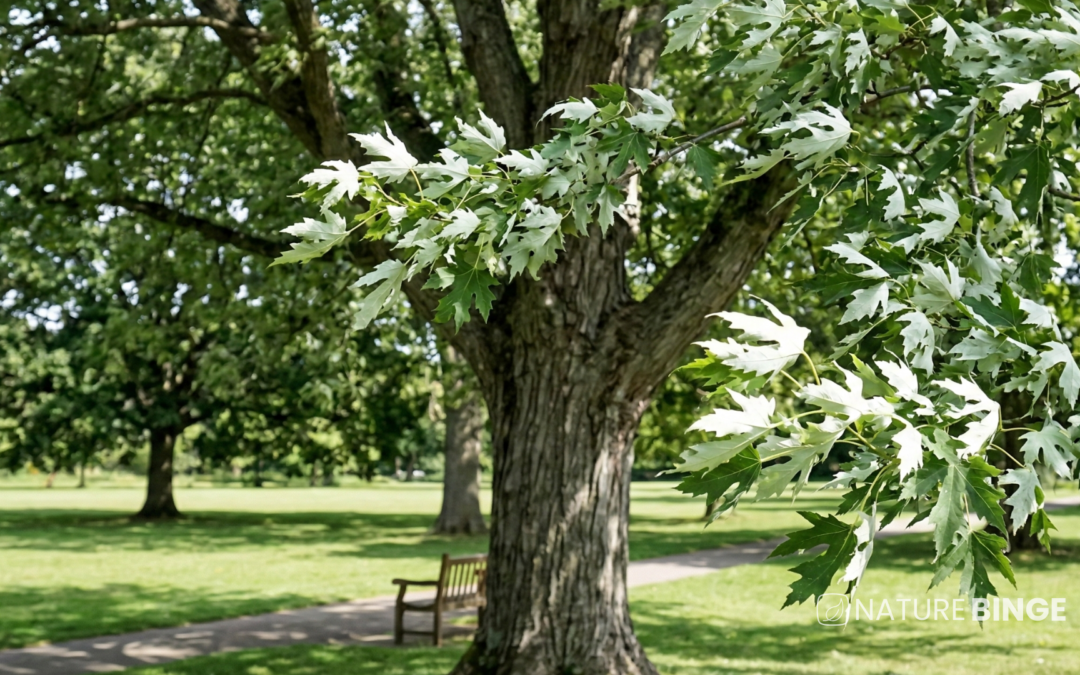
Their leaves are deeply lobed and possess a unique “shimmering” effect caused by the high density of microscopic hairs on the underside. This is not only a visual feature but also an adaptation to reflect intense sunlight and reduce water loss. Silver Maples are among the first trees to bloom in late winter or early spring, producing small, reddish flowers long before the leaves appear. These flowers provide a critical early-season nectar source for bees and other emerging insects. Their seeds, known as “samaras,” are the largest of any North American maple and are produced in massive quantities, designed to be dispersed by both wind and water to colonize new riverbanks.
Behavior and Ecology
In the riparian forest, the Silver Maple is a dominant architect. Its aggressive root system is a primary factor in preventing riverbank erosion, holding the soil together during intense spring floods. Its massive canopy provides a cool and moist microclimate that supports a diverse community of moisture-loving plants and fungi. Ecologically, the Silver Maple is a central player in the wetland food web. Its seeds are a vital food source for wood ducks, squirrels, and chipmunks, while its branches provide nesting habitat for numerous species, including the Great Blue Heron and the Prothonotary Warbler.
The relationship between the Silver Maple and the water cycle is one of total interdependence. The tree is a “heavy transpirer,” pulling massive amounts of water from the soil and releasing it into the atmosphere, which helps regulate the local humidity and temperature. However, this reliance on consistent moisture makes the tree sensitive to prolonged droughts and the diversion of water for human use. The health of a Silver Maple grove is a direct measure of the integrity and connectivity of the floodplain landscape, representing a balance between rapid growth and the high-energy environment of the river’s edge. The tree acts as a biological guardian of the watershed, a species whose endurance has allowed it to thrive in some of the most dynamic and challenging habitats in North America.
Conservation and Human Impact
While the Silver Maple is currently listed as Least Concern, it faces threats from habitat loss and the impacts of river channelization. In many parts of its range, primary floodplains are being cleared for development or restricted by levees, removing the natural environments the maples depend on. In urban areas, they are often seen as “nuisance” trees due to their aggressive roots and tendency to drop branches during storms. However, they are increasingly recognized for their value in urban stormwater management and their ability to thrive in poor soils.
Conservation efforts focus on the restoration of natural riverbanks and the protection of large, contiguous floodplain corridors. Maintaining the natural flood cycles of rivers is also essential for the successful regeneration of the species. Scientific research into the genetics of flood tolerance in maples is providing new insights into how forests can adapt to a changing climate. Protecting the Silver Maple is about more than just saving a tree; it is about safeguarding the “lungs of the river” and acknowledging the value of the fast-growing lives that sustain our watersheds. These shimmering titans remain a powerful symbol of the raw energy and resilience of the American wild.