
Overview
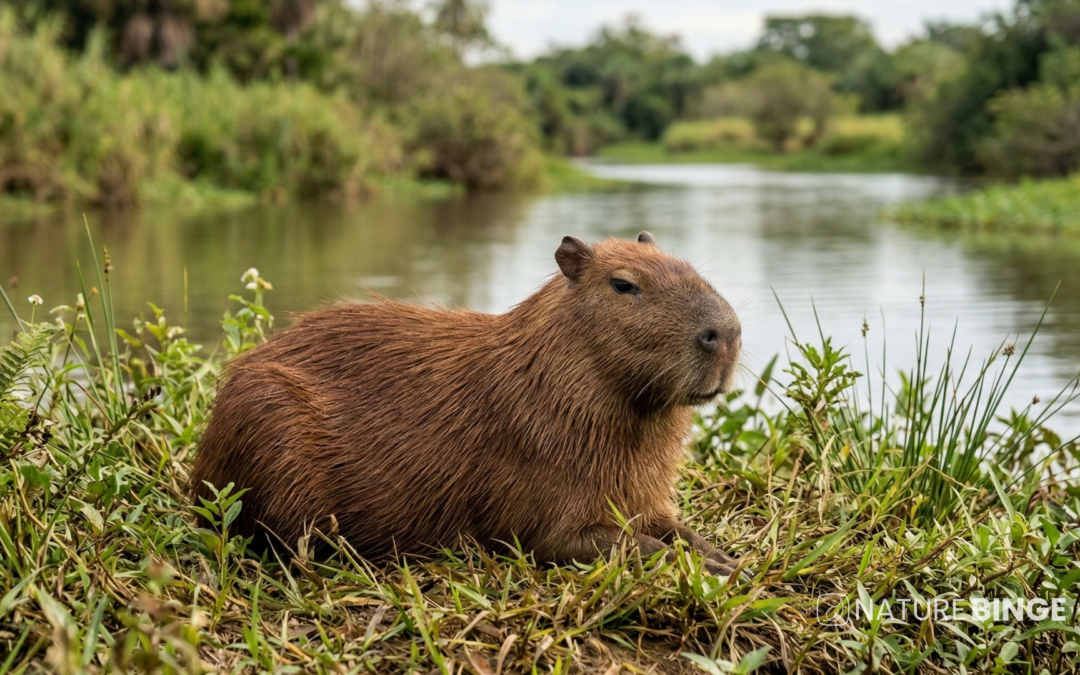
The Capybara (Hydrochoerus hydrochaeris) is the world’s largest living rodent and a definitive icon of South American wetlands. A highly social and semi-aquatic mammal, the capybara is a master of riparian survival, spending much of its time in the water to avoid predators and regulate its body temperature. Known for its docile temperament and unique role as a “biological diplomat” that often shares its space with diverse wildlife, the capybara is a keystone species in the Amazon and Pantanal ecosystems. As a specialized grazer, it plays a vital role in maintaining the balance of marshland vegetation and is a primary food source for apex predators like jaguars and anacondas. Its existence is a remarkable study in social cooperation, semi-aquatic adaptation, and the vital link between terrestrial and aquatic food webs.
Biology and Physical Characteristics
The biology of the Capybara is optimized for a dual existence. Their barrel-shaped bodies and blunt snouts are designed for moving through thick aquatic vegetation. Their eyes, ears, and nostrils are positioned on the top of their head, allowing them to remain almost entirely submerged while still monitoring their surroundings. One of their most specialized adaptations is their webbed feet, which make them exceptional swimmers and help them navigate muddy riverbanks. Their skin is thick and sparse, secreting a unique oily substance that provides waterproofing.
Their physical power is concentrated in their specialized digestive system. As “coprophages,” capybaras consume their own morning droppings to extract maximum nutrients and beneficial bacteria from their fibrous diet of grasses and aquatic plants. Their teeth are typical of rodents—continually growing incisors that allow them to process tough vegetation without wearing down. Their sensory systems are highly refined; they have panoramic vision and an acute sense of hearing, allowing them to detect predators from great distances in the open savanna. Their slow metabolism and ability to store energy allow them to survive the seasonal fluctuations of the South American wetlands.
Behavior and Ecology
Capybaras are highly social animals, living in stable family units called herds that can number from a dozen to over a hundred individuals. These groups are led by a dominant male who defends a specific territory. While they are social in the water, they are selective grazers on land, emerging at dawn and dusk to feed on up to 8 pounds of grass. Their social behavior in the water is a complex mix of whistles, barks, and clicks used to communicate within the group and warn of danger.
Ecologically, the Capybara is a vital nutrient recycler. By grazing on land and defecating in the water, they transport tons of organic matter into aquatic systems, fueling the growth of phytoplankton and supporting the entire aquatic food chain. In areas where capybara populations are healthy, the diversity of fish and other wildlife is typically higher. Their presence is a definitive sign of a healthy and productive wetland ecosystem where the connections between the land and the water are intact and active. Their docile nature also allows them to act as “mobile habitat,” providing a perch for various birds like the cattle tyrant and the wattled jacana, which feed on parasites from the capybara’s skin.
Conservation and Human Impact
While the Capybara is currently listed as Least Concern by the IUCN, they face ongoing threats from habitat loss and illegal hunting. As human populations expand and wetlands are drained for agriculture, capybara habitats are shrinking and becoming increasingly fragmented. They are also targeted for their meat and their valuable skins, which are used in the leather industry. Human-wildlife conflict is a growing issue, as capybaras may raid crops and enter urban areas in search of food.
Conservation efforts focus on habitat protection and the management of wetland resources to ensure that capybaras have the stable environments they need to survive. Programs that involve local communities in wildlife management and promote sustainable harvesting are essential for maintaining population health. Protecting the marshes and river systems where they thrive is a commitment to preserving the ecological integrity of South America. The Capybara remains a powerful symbol of the resilience and social beauty of the wild, reminding us of the intricate connections that sustain life on the water’s edge.