
Overview
The Giant Water Bug (Belostomatidae), often colloquially known as the “toe-biter” or “electric-light bug,” is one of the most formidable and evolutionarily successful predators in the invertebrate world. Found in stagnant freshwater ponds and slow-moving streams worldwide, these insects are the undisputed apex predators of their miniature aquatic ecosystems. Characterized by their large size, flattened bodies, and powerful raptorial front legs, Giant Water Bugs are masters of ambush and endurance. One of their most specialized biological traits is their unique reproductive strategy, where males of certain genera carry and care for the eggs on their backs. As regulators of aquatic insect, fish, and even small vertebrate populations, they play a vital role in maintaining the balance of freshwater habitats. Its existence is a remarkable study in predatory precision, specialized parental care, and the incredible efficiency of aquatic adaptations in the arthropod kingdom.
Biology and Physical Characteristics
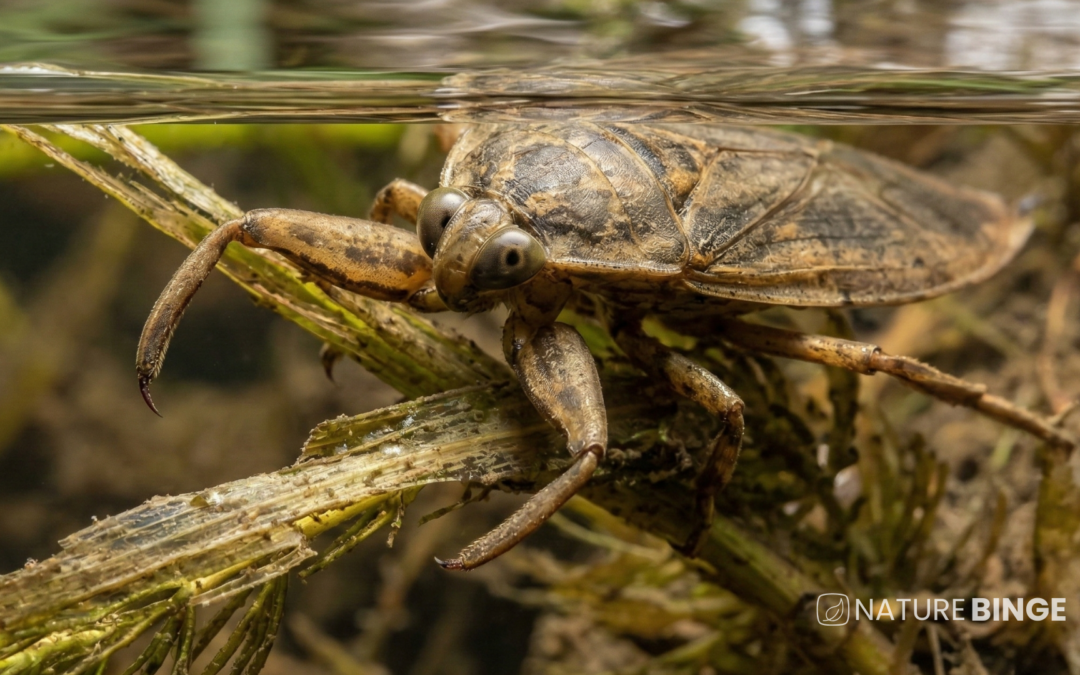
The biology of the Giant Water Bug is optimized for a life of underwater stealth and high-powered hunting. They possess a flattened, brown exoskeleton that provides excellent camouflage against decaying leaf litter and mud. Their most specialized feature is their pair of “raptorial” front legs, which are designed for seizing and holding onto slippery prey with immense strength. Unlike most insects that breathe atmospheric air through spiracles, Giant Water Bugs possess a specialized “snorkel”—a pair of retractable breathing tubes at the tip of their abdomen that allows them to breathe while remaining submerged.
Their predatory arsenal is led by a sharp, beak-like proboscis (rostrum) used to inject a potent cocktail of digestive enzymes and toxins into their prey. These enzymes liquefy the internal tissues of the victim, allowing the bug to suck out the nutrients. For humans, a defensive bite from a Giant Water Bug is considered one of the most painful of any insect, though it is not dangerous. Their sensory adaptations include large compound eyes with excellent motion detection and sensitive receptors on their legs that detect minute vibrations in the water. Internally, they possess a highly efficient respiratory system and powerful flight muscles, as they are capable of flying between water bodies at night—often attracted to bright artificial lights. This combination of physical power, specialized respiration, and chemical weaponry makes the Giant Water Bug a dominant force in the freshwater wild.
Behavior and Ecology
Giant Water Bugs are predominantly solitary and strictly nocturnal predators. They spend their days clinging to aquatic vegetation near the surface, waiting for an unsuspecting victim to swim within reach. Their diet is exceptionally diverse, including other insects, crustaceans, tadpoles, small fish, and occasionally small snakes and turtles. Their hunting strategy is one of extreme patience followed by a lightning-fast strike. One of their most famous behaviors is their parental care: in genera like Abedus and Beloostoma, the female glues her eggs onto the male’s back, and he meticulously aerates and protects them until they hatch.
Ecologically, the Giant Water Bug is a vital regulator of the freshwater food web. By preying on a wide variety of organisms, they help maintain the balance of the aquatic community and prevent any single population from over-consuming the resources of the pond. Their presence is an indicator of a productive and functional freshwater system with adequate cover and prey availability. They occupy a high tier in the invertebrate food web, serving as both effective predators and a vital food source for larger fish, herons, and mammals. Their role in the ecosystem is that of a “benthic regulator,” a species whose success is inextricably linked to the stability and nutrient flow of stagnant water bodies. The relationship between the bug and its aquatic habitat is a perfect example of the complex and often brutal interactions that sustain freshwater biodiversity.
Conservation and Human Impact
While Giant Water Bugs are currently not a species of conservation concern, they are sensitive to changes in water quality and the loss of wetland habitats. Pollution from agricultural runoff and the impacts of urban development, which often lead to the drainage of small ponds, are the primary threats. In many parts of Southeast Asia, they are a traditional food source, prized for their flavor and often harvested in large numbers.
Conservation efforts focus on the protection of small wetlands and the maintenance of diverse shoreline vegetation. Promoting “pond-friendly” land management and reducing the use of broad-spectrum pesticides are essential for supporting local populations. Scientific research into their unique venom chemistry and parental care behaviors is providing new insights into the evolution of complex life histories in invertebrates. Protecting the Giant Water Bug is about more than just saving a large insect; it is about safeguarding the incredible biological diversity and resilience of the freshwater world. Their armored forms and patient hunting remains a powerful symbol of the raw energy and specialized beauty of the underwater wild. Protecting the bug ensures that the “apex predator of the pond” continues to patrol our waters for generations to come.