
Overview
The Scarab Beetle (Scarabaeidae) is one of the most culturally significant and ecologically vital insect families in the world. Renowned for their role as nature’s primary recyclers, these beetles have been revered since the time of Ancient Egypt as symbols of rebirth and the movement of the sun. Found on every continent except Antarctica, the Scarab Beetle family includes over 30,000 species, ranging from the humble dung beetle to the spectacular Goliath beetle. Characterized by their robust, oval bodies and specialized lamellate antennae, scarabs are masters of subterranean and terrestrial survival. As essential regulators of organic waste and soil health, they play a critical role in nutrient cycling and seed dispersal. Its existence is a remarkable study in structural engineering, specialized foraging, and the incredible efficiency of invertebrates that maintain the productivity of the world’s grasslands and forests.
Biology and Physical Characteristics
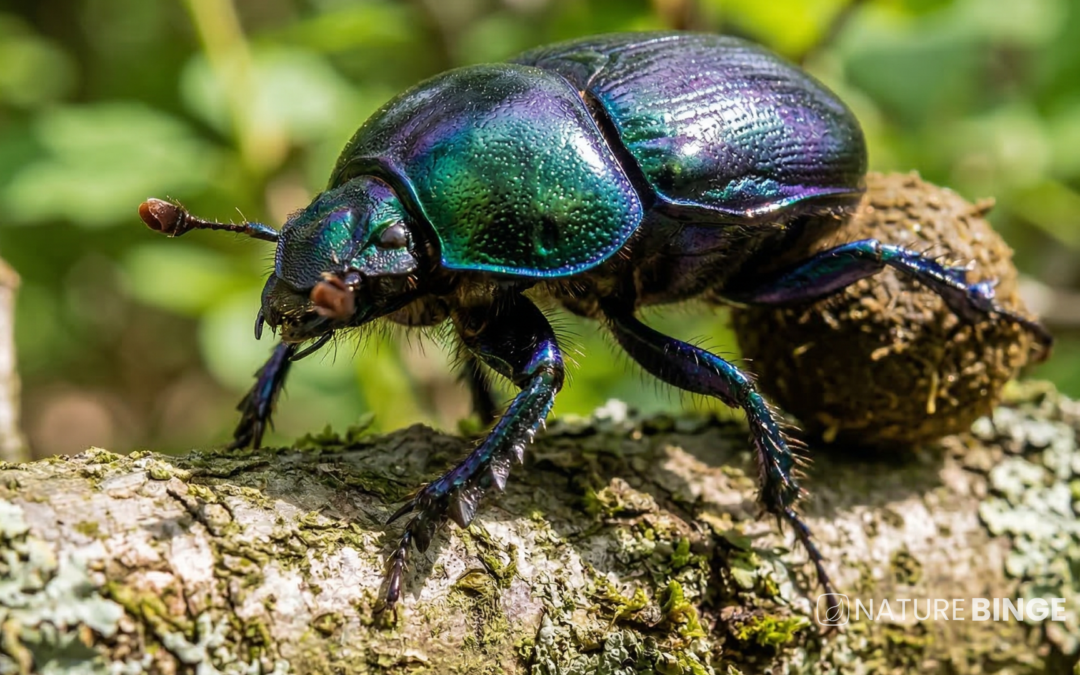
The biology of the Scarab Beetle is optimized for a powerful, earth-moving existence. They possess a robust, heavily sclerotized exoskeleton that provides a formidable suit of armor against predators. Their most specialized feature is their “fossorial” front legs—thickened and armed with sharp teeth designed for digging through soil and manipulating organic matter. Their antennae are uniquely fan-like (lamellate), providing a massive surface area for detecting the chemical signals of food sources and mates from great distances.
Their sensory adaptations are highly refined for locating specific resources. Scarab beetles possess complex compound eyes with excellent light sensitivity, and many nocturnal species utilize specialized vision to navigate using the stars or the moon. Internally, their digestive system contains specialized symbiotic bacteria that allow them to process tough organic materials, including cellulose and dung. One of their most unusual biological traits is their physical strength; some species are capable of moving loads many times their own body weight. This combination of armored defense, specialized digging tools, and sensory precision makes the Scarab Beetle one of the most successful and resilient insect groups on the planet.
Behavior and Ecology
Scarab Beetles exhibit a wide range of social and foraging behaviors. Many are strictly nocturnal, emerging from underground burrows to feed and mate under the cover of darkness. Their behavior is characterized by intense industry; dung-rolling species are famous for their ability to transport large spheres of waste to be used as food or as a brooding site for their larvae. Their life cycle is a masterpiece of metamorphosis: the larvae, known as “white grubs,” spend months to years underground feeding on organic matter before pupating into the armored adults.
Ecologically, the Scarab Beetle is a keystone “ecosystem engineer.” By processing and burying organic waste, they accelerate the return of essential minerals like nitrogen and phosphorus to the soil, supporting the productivity of the entire landscape. Their nesting activity—digging deep galleries—aerates the soil and promotes the infiltration of water, which is critical in arid environments. Their presence is a definitive sign of a functional and diverse ecosystem with healthy nutrient turnover. They occupy a vital lower-to-middle tier in the food web, serving as both effective recyclers and a primary food source for a vast array of birds, mammals, and reptiles. Their role in the ecosystem is that of a “biological stabilizer,” a species whose success is inextricably linked to the integrity and health of the world’s most productive soils.
Conservation and Human Impact
While many Scarab Beetle species are currently common, they face significant threats from habitat loss due to land clearing and the impacts of industrial agriculture. The widespread use of ivermectin in livestock can poison dung-feeding scarabs, leading to a collapse of the local recycling cycle. Furthermore, the loss of native grasslands and the fragmentation of forests reduce the available territory for these essential organisms. Historically, scarabs have been a primary focus for human art and mythology, and modern research continues to explore their potential for bio-inspired robotics and soil management.
Conservation efforts focus on the protection of primary forest and grassland reserves and the promotion of sustainable livestock management. Promoting “insect-friendly” land-use practices and reducing the use of broad-spectrum pesticides are essential for supporting local populations. Scientific research into their navigation and structural biology is providing new insights into the evolution of complex behaviors. Protecting the Scarab Beetle is about more than just saving a bug; it is about safeguarding the integrity of the world’s most productive soils and acknowledging the value of the industrious lives that keep our planet growing. Their armored, often metallic forms remain a powerful symbol of the raw energy and resilience of the wild. Protecting the beetle ensures that the “engine of the soil” continues to turn for generations to come.