
Overview
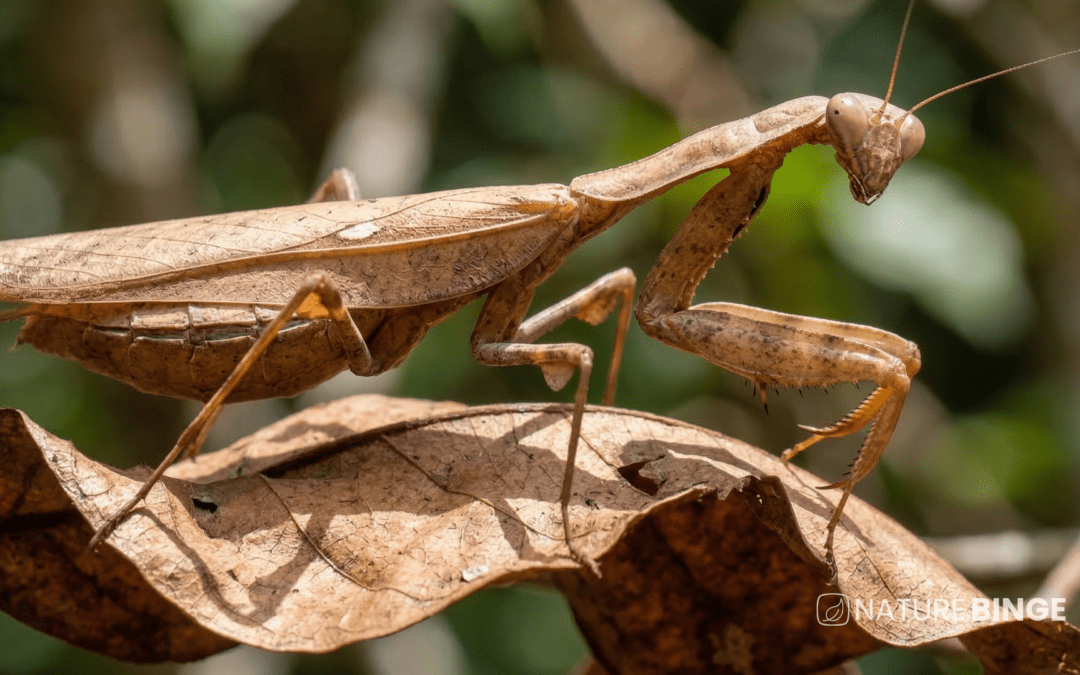
The Malaysian Dead Leaf Mantis (Deroplatys desiccata) is one of the most espectacular and biologically unique ambush predators in the invertebrate world. Native to the tropical rainforests of Southeast Asia, it has evolved a morphology that almost perfectly mimics a decaying, brown leaf. Characterized by its large, leaf-like prothorax and its flattened, lobed limbs, this mantis is a master of cryptic mimicry. As an elite predator of the forest floor and low vegetation, it plays a vital role in regulating the populations of small insects. Its existence is a remarkable study in passive deception, specialized anatomical engineering, and the incredible efficiency of survival strategies that prioritize stealth and sudden, explosive movement to ensure victory in the competitive tropical understory.
Biology and Physical Characteristics
The biology of the Malaysian Dead Leaf Mantis is entirely optimized for deception and high-powered hunting. They possess a robust, flattened body covered in irregular patterns of brown and tan that break up their silhouette against the leaf litter. Their most specialized feature is the prothorax, which is broad and wing-like, mimicking the edges of a leaf. One of their most unusual biological traits is their defensive display: when threatened, the mantis can suddenly flash the brightly colored undersides of its wings and produce a hissing sound to startle potential predators.
Their sensory adaptations are highly refined for a life spent in ambush. They possess large compound eyes with exceptional motion detection and a specialized visual field that allows them to track prey in the dappled light of the rainforest. One of their most extraordinary biological traits is their “raptorial” front legs, which are equipped with sharp spines and can be launched with lightning speed to snag prey. Internally, they have a highly efficient nervous system that coordinates their rapid strikes. This combination of physical mimicry, sensory precision, and kinetic power makes the Malaysian Dead Leaf Mantis one of the most successful and fascinating invertebrates of the tropical wild.
Behavior and Ecology
Malaysian Dead Leaf Mantises are predominantly solitary and diurnal ambush predators. They spend much of their time hanging motionlessly from the undersides of leaves or resting in the leaf litter, often swaying gently to mimic a leaf caught in the breeze. Their behavior is characterized by extreme patience; they move slowly and deliberately to avoid detection by birds and arboreal mammals. Their diet is diverse, primarily composed of flies, moths, and other small invertebrates. During the night, they remain hidden in the dense vegetation.
Ecologically, the Malaysian Dead Leaf Mantis is a vital regulator of the rainforest food web. By preying on a wide variety of insects, they help maintain the balance of the local ecosystem. Their presence is a definitive sign of a healthy and moist tropical forest with an intact understory. They occupy a middle tier in the food web, serving as both effective predators and a potentially high-protein food source for specialized predators like reptiles and birds. Their role in the ecosystem is that of a “cryptic regulator,” a species whose feeding habits influence the abundance of lower-tier invertebrates. The relationship between the mantis and its forest habitat is a perfect example of the complex evolutionary strategies that sustain tropical biodiversity.
Conservation and Human Impact
While the Malaysian Dead Leaf Mantis is currently common and not a species of conservation concern, they face ongoing threats from habitat loss due to deforestation in Southeast Asia. Because of their spectacular appearance and relatively easy care, they are one of the most popular species in the global invertebrate pet trade and are frequently utilized in educational displays worldwide. Historically, they have been a subject of fascination for entomologists due to their extreme mimicry.
Conservation efforts focus on the protection of primary rainforest tracts and the maintenance of diverse habitat corridors. Promoting the preservation of native tropical forests is essential for the long-term survival of the species. Scientific research into their visual systems and the mechanics of their strike is providing new insights into the potential for bio-inspired robotics and vision technologies. Protecting the Malaysian Dead Leaf Mantis is about more than just saving a large insect; it is about safeguarding the incredible biological heritage and innovation of the Southeast Asian tropics. Their gnarled, leaf-like forms remain a powerful symbol of the hidden beauty and success of the wild world. Protecting the mantis ensures that the “ghosts of the forest floor” continue to thrive for generations to come.