
Overview
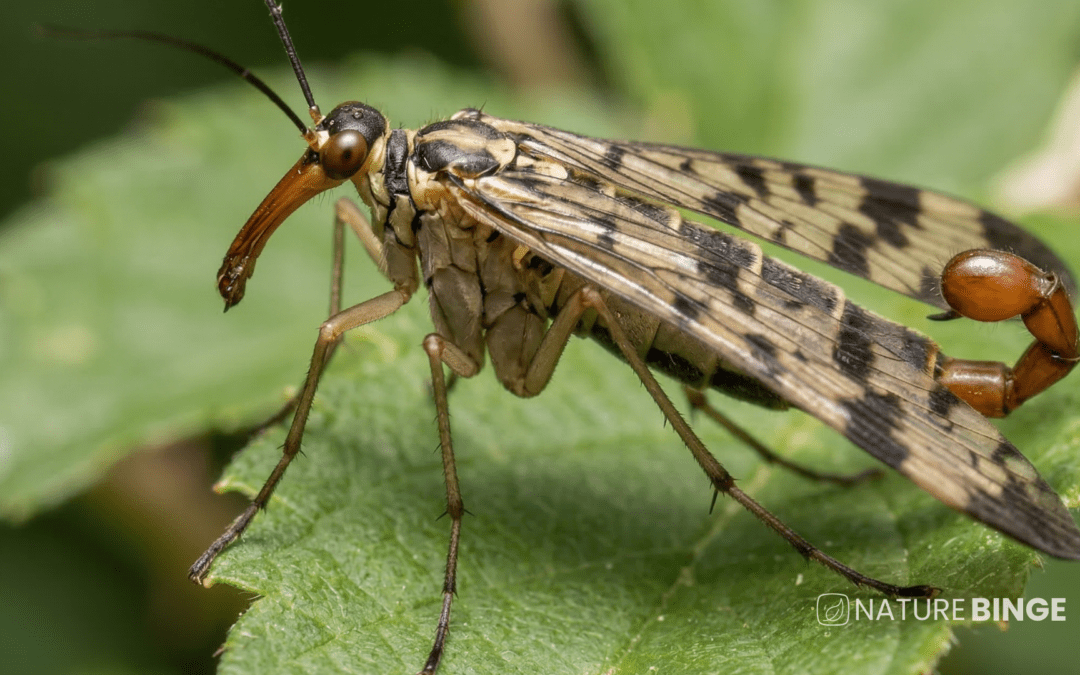
The Scorpionfly (Panorpa communis) is one of the most anatomically striking and biologically unique insects in the Palearctic. Named for the spectacular, stinger-like tail possessed by the males—which bears a startling resemblance to that of a scorpion—it is actually a harmless member of the Mecoptera order. Found in the lush hedgerows and shaded woodlands of Europe and Northern Asia, the Scorpionfly is a master of specialized foraging. Unlike most insects that hunt active prey, it is a primary scavenger of the insect world, often stealing trapped victims from spider webs. Characterized by its elongated, beak-like head and its complex mating rituals, the Scorpionfly is a symbol of evolutionary divergent paths. As a regulator of dead organic matter and a unique participant in the forest food web, it plays a vital role in maintaining the balance of the understory. Its existence is a remarkable study in mimicry, specialized sensory adaptation, and the incredible diversity of life cycles that utilize deceptive anatomy for reproductive success.
Biology and Physical Characteristics
The biology of the Scorpionfly is defined by its extraordinary anatomical features and its robust exoskeleton. They possess a slender body and four clear, mottled wings that provide agile, hovering flight. Their most specialized feature is the male’s terminal abdominal segment, which is bulbous and curved upward, ending in a pair of forceps. While it appears lethal, it is entirely non-venomous and is used exclusively for grasping the female during mating. Their head is equally distinctive, elongated into a downward-pointing rostrum with chewing mouthparts at the tip, allowing them to reach into crevices and spider webs.
Their sensory adaptations are highly refined for locating food sources in complex environments. They possess large, sensitive compound eyes and long antennae used to detect chemical signals from carrion and pheromones from potential mates. One of their most unusual biological traits is their foraging behavior: they are “kleptoparasites,” utilizing their specialized rostrum and agile flight to extract dead insects from the webs of spiders without getting caught themselves. Internally, they possess a highly efficient respiratory system and a robust digestive tract capable of processing a variety of organic matter. This combination of structural scale, behavioral cunning, and specialized anatomy makes the Scorpionfly one of the most successful and distinctive invertebrates of the temperate wild.
Behavior and Ecology
Scorpionflies are predominantly solitary and diurnal, becoming most active during the warm summer months. Their behavior is characterized by their adventurous foraging; they are often seen hovering near spider webs or resting on low vegetation in damp, shaded areas. Their mating rituals are among the most complex in the insect world: males often present females with a “nuptial gift”—a piece of carrion or a drop of salivary secretion—to avoid being attacked during courtship. Their life cycle involves a complete metamorphosis, with the larvae living in the soil and feeding on organic debris before pupating.
Ecologically, the Scorpionfly is a vital recycler of the forest floor food web. By processing large quantities of insect carrion and facilitating the turnover of organic matter, they support the productivity of the entire woodland community. Their presence is a definitive sign of a healthy and diverse landscape with adequate cover and complex interactions. They occupy a middle tier in the food web, serving as both effective scavengers and a high-protein food source for larger birds, spiders, and amphibians. Their role in the ecosystem is that of a “micro-janitor,” a species whose success is inextricably linked to the availability of forest detritus and the diversity of the local invertebrate community. The relationship between the Scorpionfly and its woodland habitat is a perfect example of the complex and often invisible dramas that sustain life in the wild.
Conservation and Human Impact
While the Scorpionfly is currently common and not a species of conservation concern, they are sensitive to habitat loss and the “over-cleaning” of forest edges and hedgerows. The removal of dead wood and the destruction of diverse undergrowth reduce the available foraging and breeding sites for the species. Pollution, particularly the use of broad-spectrum pesticides in agriculture, can impact their development and the availability of their food sources. Historically, they have been a subject of fascination for entomologists due to their unique morphology and ancient lineage.
Conservation efforts focus on the preservation of diverse habitat corridors and the promotion of “wildlife-friendly” landscaping. Maintaining natural woodland edges and reducing the chemical inputs in nearby agricultural areas are essential for the long-term survival of the species. Scientific research into their mating behaviors and pheromone chemistry is providing new insights into the evolution of sexual selection in invertebrates. Protecting the Scorpionfly is about more than just saving a strange insect; it is about safeguarding the incredible biological heritage and mystery of the Palearctic world. Their armored, tail-curling forms remain a powerful symbol of the resilience and specialized beauty of the nocturnal world. Protecting the fly ensures that the “scorpions of the hedge” continue to haunt our forests for generations to come.