

Overview
The White Ash (Fraxinus americana) is an aristocratic, towering native hardwood tree celebrated across North America for its magnificent, soaring columnar trunk and its famous, shock-resistant timber that has carved every classic wooden baseball bat in Major League history. Once a dominant keystone species of eastern deciduous forests, this noble tree turns Appalachian autumn hillsides into a breathtaking tapestry of deep purple and bronze.
Biology and Physical Characteristics
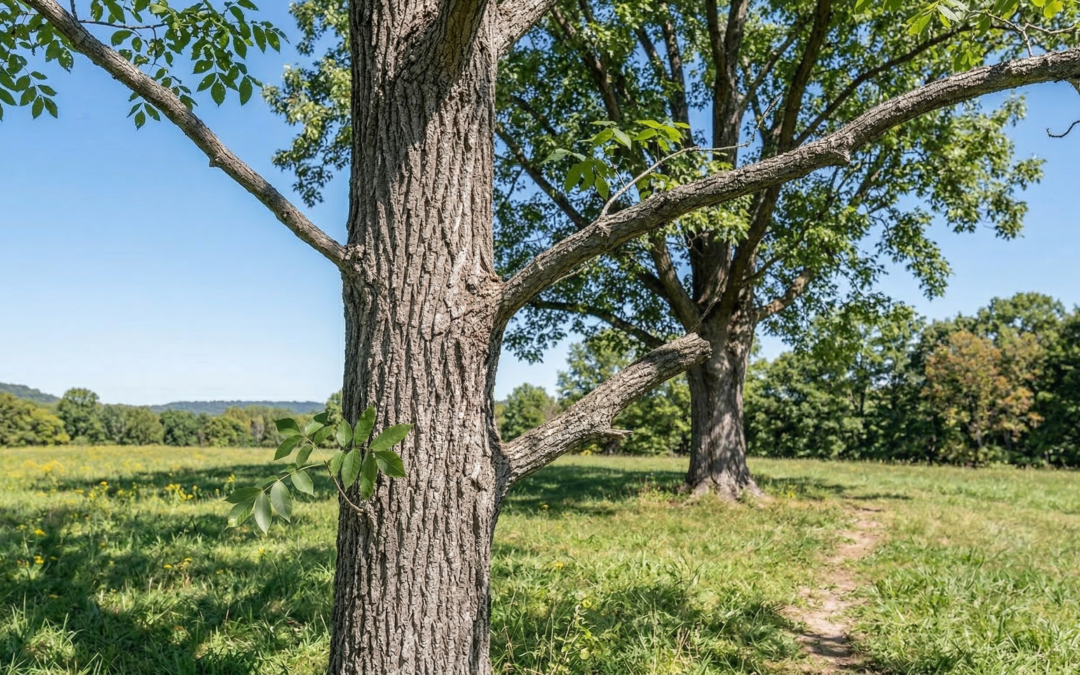
Fraxinus americana possesses a straight, clean trunk covered in handsome dark grey bark with deep, diamond-patterned interlocking ridges. Its leaves are pinnately compound with 5 to 9 ovate leaflets that are bright green above and pale whitish beneath (giving the tree its common name). In autumn, its foliage undergoes a spectacular color transformation, shifting from deep plum-purple and maroon to golden-bronze. It produces clusters of winged, paddle-like samaras (ash keys).
Behavior and Ecology
A fast-growing, long-lived canopy dominant, the White Ash thrives in fertile Appalachian coves alongside sugar maple, American basswood, and northern red oak. Its dense foliage serves as the host plant for over 150 species of native Lepidoptera, including the magnificent eastern tiger swallowtail, while its abundant seed crops feed cardinals, pine grosbeaks, and wood ducks.
Conservation and Human Impact
Assessed as Critically Endangered by the IUCN, the White Ash has suffered devastating, catastrophic mortality following the accidental introduction of the Emerald Ash Borer (Agrilus planipennis), an invasive Asian jewel beetle whose larvae consume and girdle the vascular cambium. Extensive federal biocontrol releases and seed banking initiatives are racing to protect surviving wild genetic lineages.
Interesting Factoid
Virtually every wooden baseball bat swung in Major League Baseball history was carved from the shock-absorbing, resilient wood of the White Ash; the timber possesses unique natural elasticity that does not shatter upon impact with a 95-mph fastball.