
Overview
The White Ash (Fraxinus americana) is one of the most majestic, valuable, and ecologically significant trees in the North American hardwood forest. Known for its towering height, spectacular diamond-patterned bark, and its espectacular autumn foliage ranging from brilliant gold to deep purple, it is the definitive tree of the eastern deciduous woods. Found from the Great Lakes to the Gulf Coast, the White Ash is a foundation species that provides critical food and habitat for a vast array of wildlife and is a primary driver of nutrient cycling in the temperate forest. Its existence is a remarkable study in structural resilience, specialized reproductive biology, and the tragic modern story of the devastating impacts of invasive species on the integrity of our native wilderness. Beyond its ecological value, the White Ash remains a cornerstone of the American economy, famously providing the primary material for professional baseball bats.
Biology and Physical Characteristics
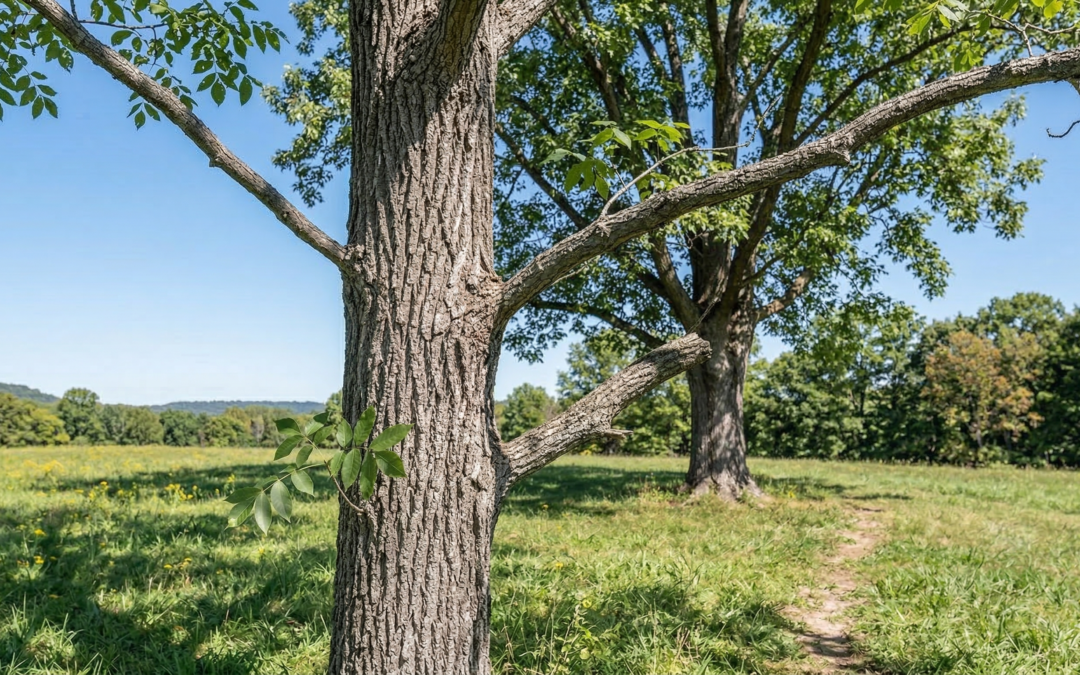
The biology of the White Ash is optimized for dominance and rapid growth in the forest canopy. Their most striking feature is the bark—on mature trees, it develops into a unique and beautiful pattern of interlacing diamond-shaped ridges, providing exceptional protection against insects and rot. One of their most specialized adaptations is their wood: it is exceptionally strong, straight-grained, and resistant to splitting, yet remains lightweight—a combination of traits that has made it irreplaceable for high-performance tool handles and sports equipment. Their leaves are pinnately compound, Typically with 7 leaflets, providing a light shade that supports a diverse understory.
White Ashes are angiosperms, producing inconspicuous flowers in early spring before the leaves emerge. They are dioecious, meaning individual trees are either male or female. Their fruit is a single-winged samara—a “helicopter” seed—designed to travel hundreds of feet on the wind to colonize new forest gaps. One of their most specialized adaptations is their root system: they possess a shallow but extremely wide-reaching network of roots that provides stability in a variety of soil types. Biologically, they are long-lived, often surviving for two centuries. This biological efficiency and structural resilience make the White Ash a vital link to the ancient forests of North America.
Behavior and Ecology
In the temperate forest, the White Ash is a primary architect of structure and change. As a “climax-pioneer” species, it is one of the first trees to colonize open ground but also remains a dominant member of mature hardwood forests, often associated with maples and oaks. Its presence is a definitive sign of a healthy and productive forest ecosystem with adequate nutrient flow. Ecologically, the White Ash is a central player in the forest food web. Its seeds are a primary food source for birds like the wood duck and mammals like the squirrel, while its massive branches provide nesting habitat for numerous species, including hawks and owls.
The relationship between the White Ash and the nutrient cycle is one of total interdependence. The tree acts as a natural soil improver, drawing minerals from the subsoil and returning them to the forest floor through its nutrient-rich leaf litter. Furthermore, ash forests are among the most effective carbon sequesterers in the eastern region, locking away massive amounts of organic carbon within their dense wood and the forest soil. However, this reliance on stable, diverse environments makes the tree sensitive to over-management and the catastrophic impacts of the Emerald Ash Borer (EAB)—an invasive beetle from Asia that has decimated populations across its range. The health of a white ash grove is a direct measure of the resilience and history of the landscape, representing a balance between rapid growth and centuries of ecological support.
Conservation and Human Impact
The White Ash is currently listed as Critically Endangered by the IUCN, and its survival remains dependent on active human intervention. The greatest modern threat is the Emerald Ash Borer, which has killed tens of millions of trees since its introduction in the early 2000s. This loss has profound impacts on forest structure, water quality, and the survival of numerous specialized insect species that depend on ash trees. Historically, the tree was a cornerstone of the early American frontier economy, and modern research continues to explore its potential for genetic resistance to the beetle.
Conservation efforts focus on the protection of the remaining high-value groves, the collection of seeds for long-term storage, and the implementation of biological control programs using predatory wasps. Maintaining forest connectivity and protecting the native wildlife that depends on ashmast are essential for the survival of the forest’s biodiversity. Scientific research into the genetics of EAB resistance is providing new insights into how hardwood forests can adapt to a changing world. Protecting the White Ash is about more than just saving a tree; it is about safeguarding the incredible biological wealth and history of the North American wilderness. These diamond-barked titans remain a powerful symbol of the raw energy and resilience of the American wild. Protecting the ash ensures that the “spirit of the woods” continue to provide for the community for generations to come.