

AT A GLANCE
- Common Name: Dead Leaf Mantis
- Scientific Name: Deroplatys desiccata
- Category: Invertebrates
- Subcategory: Insects
- Range: Southeast Asia, native to the tropical rainforests of Peninsular Malaysia, southern Thailand, Sumatra, Borneo, and Java
- Habitat Type: Primary tropical rainforest understory, lowland dipterocarp forests, and damp leaf litter layers on the jungle floor
- IUCN Red List Status: Not Evaluated (widespread in Southeast Asian rainforests)
- Lifespan: 12 to 18 months
- Diet: Carnivorous/Ambush predator (flying moths, crickets, grasshoppers, flies, and other invertebrates ambushed from camouflage)
- Average Size/Weight: Total length 75 to 90 mm (females), 65 to 75 mm (males); weight 4 to 8 g
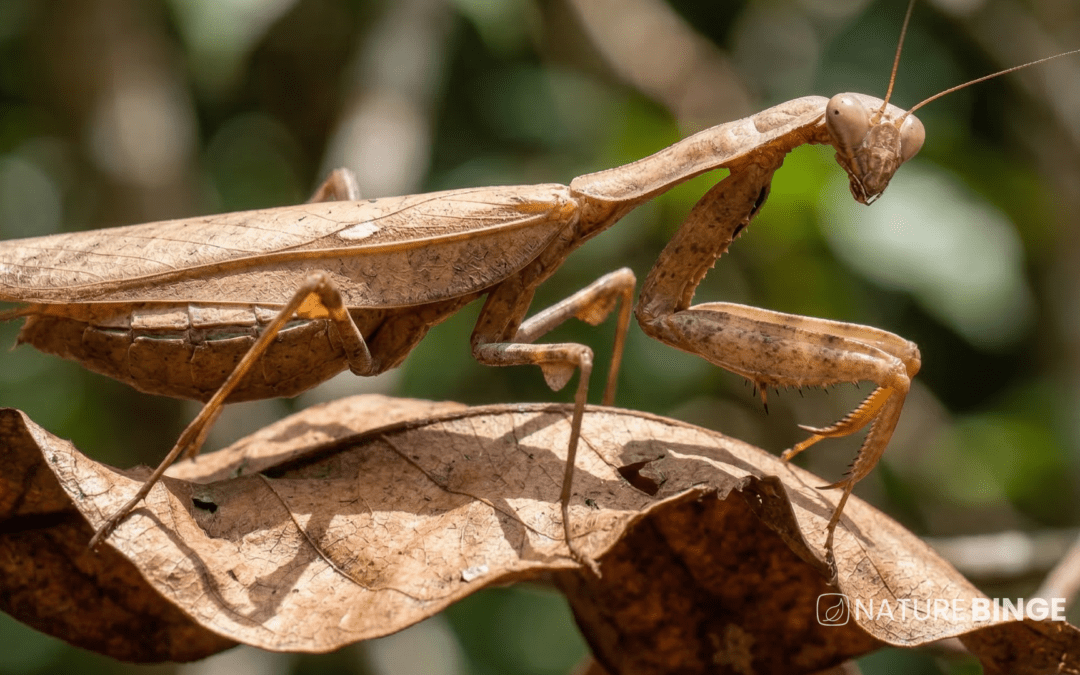
- Key Defining Feature: Magnificent praying mantis with an enormously expanded, shield-like thorax and mottled brown wings that flawlessly mimic a dry, crumpled, decaying tropical leaf
Overview
The Dead Leaf Mantis (Deroplatys desiccata), also known as the Giant Dead Leaf Mantis, is one of the most masterfully camouflaged predatory insects in the natural world. Native to the humid rainforest floors of Southeast Asia, this formidable member of the family Deroplatyidae is the ultimate living illusion of botanical decay. In its natural resting posture, its body looks identical to a dead, curled, brown leaf lying on the forest floor, complete with realistic leaf veins, weathered brown spots, and jagged, chewed-looking edges.
Biology and Physical Characteristics
Deroplatys desiccata exhibits incredible morphological crypsis. Its prothorax (the section behind the head) is flared into an immense, flattened, shield-like bell, resembling the broad base of a dried tropical leaf. Its wings and body are colored in rich, mottled shades of chocolate-brown, dried sepia, and grey, detailed with microscopic markings that simulate fungal blemishes, water stains, and ragged leaf venation. The head is small and triangular, crowned with large compound eyes. Its powerful raptorial forelegs are equipped with rows of sharp, interlocking spines designed to pin and impale struggling insect prey in a fraction of a second.
Behavior and Ecology
An ambush predator of supreme patience, the Dead Leaf Mantis hangs motionless among fallen foliage, gently swaying its body from side to side to simulate a dead leaf rustling in the breeze. When an unsuspecting cricket or moth wanders within striking distance, the mantis unleashes a strike lasting barely thirty milliseconds, snatching the prey before it can react. If uncovered by a predatory bird or monkey, the mantis abandons crypsis and executes a shocking deimatic display: it rears up, spreads its forelegs wide, and flares its broad hind wings to reveal dazzling, high-contrast black and yellow eyespots while hissing loudly by rubbing its abdomen against its wings.
Conservation and Human Impact
The Dead Leaf Mantis has not been formally evaluated by the IUCN Red List. It remains widespread throughout intact rainforest reserves in Malaysia and Indonesia, although localized populations are impacted by extensive deforestation and the pet trade.
Interesting Factoid
When camouflage fails, the Dead Leaf Mantis suddenly rears up and flashes gigantic, hidden black-and-yellow fake eyes on its wings while hissing like a snake to startle hungry birds.