
Overview
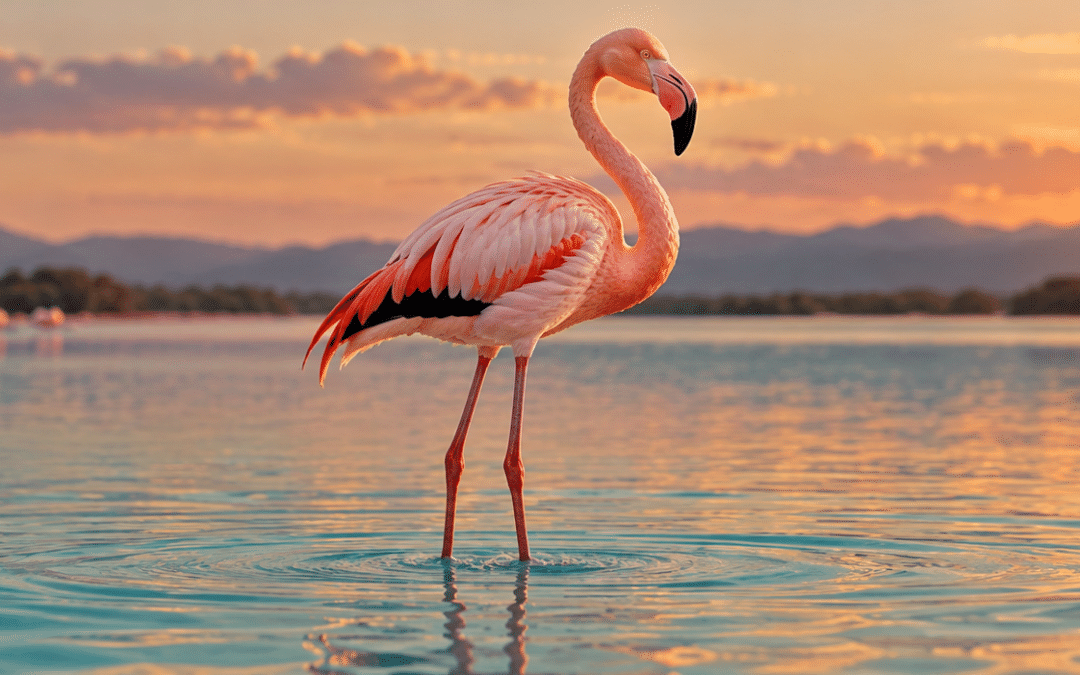
The Greater Flamingo (Phoenicopterus roseus) is the largest and most widespread member of the flamingo family, celebrated for its stilt-like pink legs, sinuous neck, and brilliant rosy-salmon plumage. Flocking by the tens of thousands across shallow hypersaline lagoons and alkaline lakes from the Mediterranean to southern Africa, this elegant wading bird represents a masterclass in extreme habitat adaptation.
Biology and Physical Characteristics
The most distinctive biological feature of the flamingo is its specialized, downward-bent beak, which functions as an upside-down filter-feeding pump. The beak is lined with microscopic, comb-like lamellae that filter tiny brine shrimp, diatoms, and organic detritus from brackish mud, while a muscular, spiny tongue pumps water through the filtration sieve up to four times per second. Their striking pink and crimson coloration is not genetic, but rather synthesized through metabolic breakdown of carotenoid pigments ingested from their diet of microalgae and brine shrimp.
Behavior and Ecology
Greater flamingos are exceptionally gregarious birds, living in synchronized colonies that can number over 100,000 individuals. To coordinate mass breeding, colonies execute elaborate courtship displays where thousands of birds march in unison, bobbing heads and snapping wings in rhythmic choreography. They nest colonially on mud mud mounds built up to 12 inches high to protect their single chalky-white egg from fluctuating saline water levels. Remarkably, parents feed their newly hatched chicks ‘crop milk’—a protein- and fat-rich secretion produced in the upper digestive tract.
Conservation and Human Impact
While globally classified as Least Concern due to widespread ranges, greater flamingos are vulnerable to localized industrial drainage, coastal commercial development, and agricultural water diversion that alters salinity balances in breeding lakes. Heavy metal pollution from agricultural runoff and lead shot ingestion pose chronic health risks. Coordinated regional wetland management plans in southern France (Camargue) and across East African Rift lakes have succeeded in protecting vital breeding sites.
Interesting Factoid
Flamingos routinely stand on one leg to conserve body heat; tucking one limb against the feathered torso reduces convective heat loss in cold lagoon waters by nearly half.