
Overview
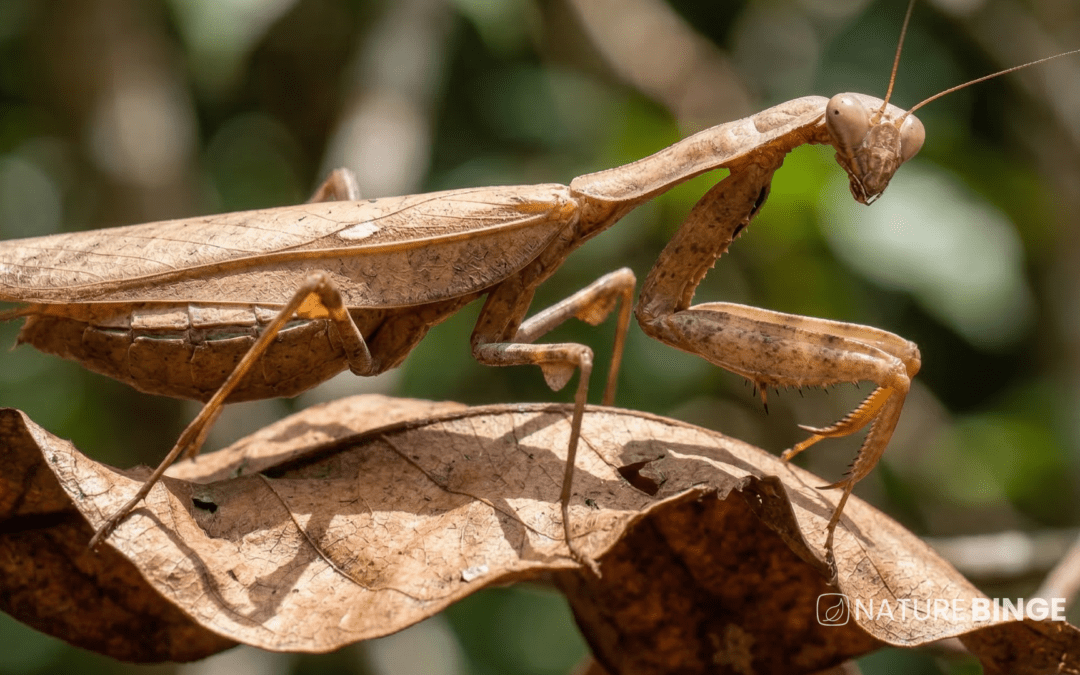
The Malaysian Dead Leaf Mantis (Deroplatys lobata) is a premier example of evolutionary masquerade in the insect world. Native to the humid equatorial rainforests of Southeast Asia, this formidable ambush predator features a broad, flattened pronotal shield shaped precisely like a desiccated, crumpled dead leaf, allowing it to vanish effortlessly into the carpet of rotting forest foliage while waiting to ambush passing insects.
Biology and Physical Characteristics
Females of Deroplatys lobata boast an expansive, diamond-shaped thoracic hood complete with scalloped, irregular edges, faux fungal spots, and prominent vein-like ridges mirroring rotting leaf decay. Their coloration ranges through intricate mottled shades of greyish-brown, tan, and dark umber. While in repose, their raptorial forelegs fold tightly against their thorax, concealing formidable rows of sharp spines designed to clamp onto struggling insect quarry.
Behavior and Ecology
Deroplatys lobata is an ambush predator that gently sways from side to side in tropical breezes, perfectly mimicking a dead leaf trembling in the wind. When an insect wanders within reach, the mantis strikes in less than thirty milliseconds. If threatened by large predators such as lizards or birds, it drops to the leaf litter and remains limp (thanatosis), or abruptly unfurls its hindwings in a terrifying deimatic threat display, flashing bold black-and-yellow eyespots while hissing.
Conservation and Human Impact
Common across the Sundaland rainforest realm, Deroplatys lobata is classified as Least Concern. Although primary forest conversion for monoculture oil palm plantations degrades extensive tracts of native lowlands, the species readily persists in secondary forests, shaded village groves, and mature nature reserves such as Taman Negara.
Interesting Factoid
When the Malaysian Dead Leaf Mantis feels threatened, it can perform an Oscar-worthy performance: playing completely dead like a dry leaf, or suddenly snapping open its wings to reveal giant fake glowing eyes that frighten off birds.
Last updated: October 2026