

Overview
The Oyster Mushroom (Pleurotus ostreatus), celebrated across global mycophagy and industrial biotechnology as the pearl oyster mushroom or tree oyster, is a widespread, shelf-like wood-decay macrofungus belonging to the family Pleurotaceae within the order Agaricales. Indigenous to the temperate and boreal deciduous hardwood forests of the Northern Hemisphere—spanning North America, Europe, and Asia—it is legendary for its oyster-shaped caps that emerge in overlapping, shelf-like clusters from the bark of dying and fallen broadleaf trees, particularly beech, oak, and willow.
AT A GLANCE
- Common Name: Oyster Mushroom
- Scientific Name: Pleurotus ostreatus
- Category: Fungi
- Subcategory: Pleurotaceae & Agaricales
- Size: Cap diameter 5–25 cm (2.0–9.8 in); cluster spreads up to 50 cm; lateral stipe 1–3 cm
- Weight: 100–500 g (3.5–17.6 oz); large overlapping clusters can weigh 1–3 kg
- Lifespan: Fruiting body persists 1–2 weeks; perennial subterranean mycelium survives inside wood for years
- Diet: Carnivorous saprotroph (decomposes hardwood lignin while actively capturing and digesting microscopic nematodes)
- Habitat: Temperate deciduous hardwood forests, riparian riverbottom woodlands, montane beech groves, and urban parks on decaying hardwood logs (sea level to 2,000 m)
- Range: Cosmopolitan throughout the temperate, subtropical, and boreal forests of the Northern Hemisphere (North America, Europe, Asia); widely cultivated worldwide
- Conservation Status: Least Concern (IUCN Red List)
Beyond its high culinary esteem as a delicate gourmet edible mushroom featuring a mild, velvety, anise-scented flavor profile, Pleurotus ostreatus possesses an astonishing, sinister secret in its subterranean ecology: it is a carnivorous fungus. To acquire essential nitrogen in nutrient-starved decaying wood, its mycelial hyphae produce microscopic toxin-bearing droplets containing 3-octanone that paralyze microscopic nematode roundworms crawling through the wood; the fungal hyphae then actively penetrate the paralyzed worm’s body, digesting it from the inside out. In modern environmental biotechnology, its prolific secretion of versatile oxidative enzymes (lignin peroxidases and laccases) has placed it at the vanguard of mycoremediation, capable of breaking down toxic industrial pollutants, petrochemical crude oil, and synthetic plastics.
Biology and Physical Characteristics
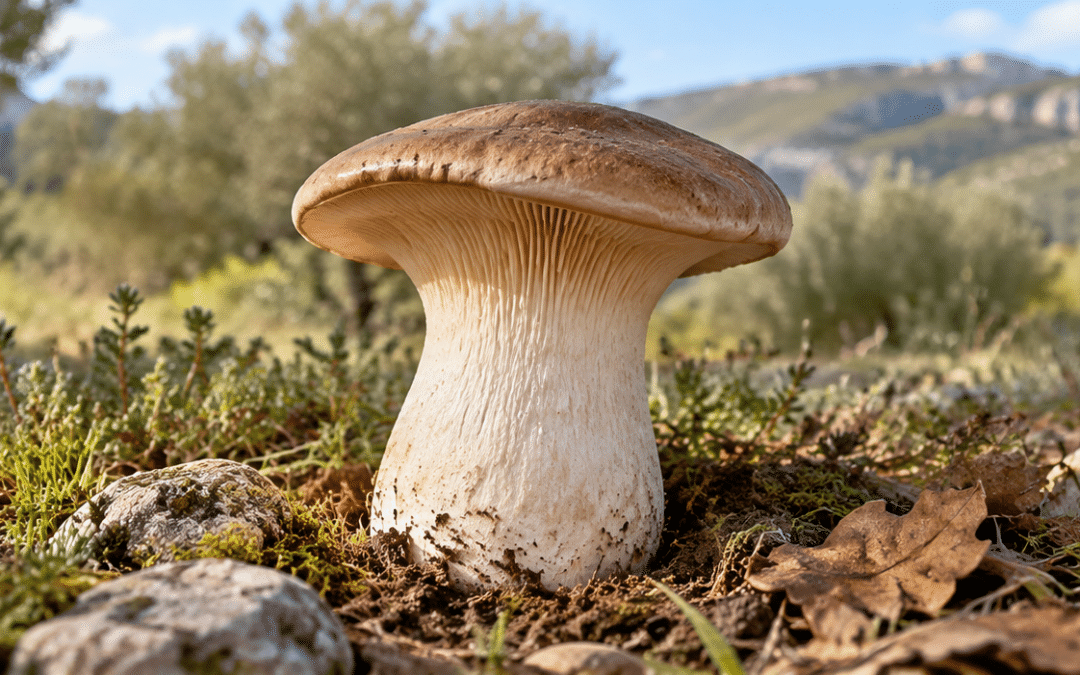
The fruiting body (basidiocarp) of the Oyster Mushroom is pleurotoid, characterized by an asymmetrical, fan-shaped to shell-shaped (ostreate) cap measuring 5 to 25 cm across. The cap surface is smooth, slightly greasy when moist, with margins that are initially inrolled before unrolling and becoming wavy or lobed with maturity. Cap coloration is remarkably variable depending on light and temperature: ranging from pale pearly gray, silver, and dove-blue in cool weather to warm tan, beige, or ivory-white under warmer conditions.
The gills are broad, crowded, and uniquely decurrent, running down the short, off-center lateral stem (stipe) to its attachment point on the wood substrate; gills are white to creamy-buff, sometimes anastomosing (branching and reconnecting) near the stem base. Basidiospores are cylindrical to oblong, smooth, hyaline, measuring 7.5 to 11 micrometers, producing a distinctive, copious spore print that is pure white to faint lilac-gray. The fungus secretes pleurotolysin—a pore-forming toxin that disrupts insect and nematode membranes—alongside colossal quantities of extracellular oxidative enzymes that decompose complex aromatic lignin rings into simple assimilable carbohydrates.
Behavior and Ecology
Oyster Mushrooms are aggressive, primary saprotrophic colonizers of dead, standing, or fallen broadleaf hardwoods, flourishing particularly on European beech (Fagus sylvatica), poplars, maples, and oaks. Fruiting occurs primarily during cool, damp weather in late autumn and early winter, often triggered by the first severe cold snaps of the season, and can continue through winter thaws.
Its nematode-trapping predatory behavior is an exquisite evolutionary marvel of mycological carnivory: when nematode worms brush against specialized secretor cells on the fungal hyphae, the droplets rupture, discharging volatile paralyzing nerve toxins. Within minutes, the paralyzed worm is immobilized; the fungal hyphae then sprout invasive trophic hyphae that enter through the worm’s mouth or anus, proliferating rapidly throughout its internal organs to absorb proteins, nucleic acids, and nitrogen compounds. In commercial cultivation, its vigorous mycelium can be cultivated on virtually any cellulosic agricultural waste—including straw, coffee grounds, sugarcane bagasse, and cardboard—making it the second most widely cultivated edible mushroom in the world after the button mushroom.
Conservation and Human Impact
The Oyster Mushroom is categorized as Least Concern on the IUCN Red List, abundant, secure, and flourishing across temperate forest ecosystems throughout the globe.
In natural forest ecology, Pleurotus ostreatus is an essential keystone decomposer: by rapidly decomposing dense structural lignin that resists bacteria and other fungi, it softens dead logs, unlocks sequestered carbon, and creates vital decaying microhabitats for hundreds of species of saproxylic beetles, salamanders, and woodland invertebrates. Sustainable commercial cultivation provides a low-carbon, highly nutritious protein source, while industrial mycoremediation projects utilize oyster mushroom mycelium to clean toxic petrochemical spills, heavy metal mine tailings, and contaminated agricultural soils.
Interesting Factoid
The Oyster Mushroom is actually a carnivorous predator: while it rots tree trunks, its underground fungal threads release a nerve poison that paralyzes microscopic roundworms crawling through the wood, and then the fungus grows inside the worms and eats them alive.